
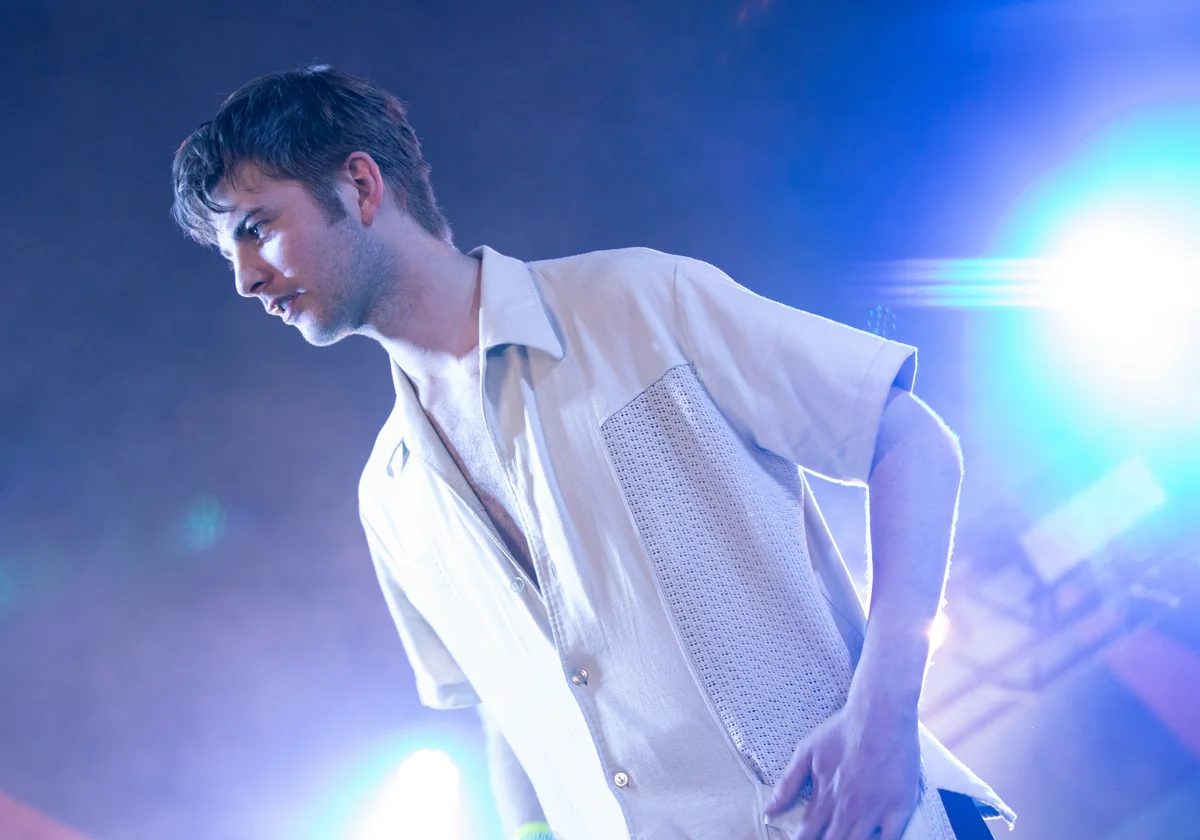
Post-punk promotion should transmit tension, movement and intent. The music may lean toward wiry guitars, motorik repetition, dub space, synth severity, dance-floor bass or spoken vocals, but monochrome photographs and the right genre tag will not create a campaign on their own. The useful question is: what social, physical or emotional pressure does this record turn into rhythm?
This release playbook adapts LISTN’s music promotion by genre system to post-punk’s live circuits, independent media and visual language. Artists exploring potential partners can also consult the post-punk record label guide. Neither outreach nor spending guarantees coverage, airplay, streams or a deal. The aim is to present a strong record coherently and put it in front of people who already support this musical world.
Find the pressure point: post-punk positioning
Write a campaign sentence that contains three things: the track’s physical engine, its subject, and its scene adjacency. For example: “Bass-driven post-punk with clipped guitar and a spoken vocal about surveillance, built for small dark rooms.” That gives a booker, host or listener more to work with than “dark, energetic music influenced by the ’80s.”
Define the release through these lenses:
- Rhythmic engine: is the body pulled by a circular bass line, tom pattern, drum machine, disco pulse or deliberate lurch?
- Vocal stance: detached observation, confrontation, anxious repetition, narrative speech or melodic release?
- Production space: dry and close, dub-influenced, industrial, cavernous, lo-fi or sharply modern?
- Cultural frame: local DIY community, queer club night, art-school experimentation, political lyric, goth-adjacent dance floor or guitar venue?
Historical references can orient people, but do not make them carry the whole pitch. Pair one lineage point with a present-tense detail and a real reason the song exists.
Prepare a compact release kit: short and long bio, private stream, WAV and MP3, cover, two press photographs, lyrics, credits, release date, contact, city and live availability. Add a clean radio edit when required. A one-page note about the visual concept or recording method can help specialist writers, but only if it contains concrete information.
Ranked promotional routes for post-punk
1. Live bills, DIY spaces and club nights
Post-punk is carried by rooms where rhythm and atmosphere are felt together. Seek bills with sonic logic: post-punk, noise rock, synth, experimental pop, goth, punk or left-field electronic artists can connect, but the fit depends on the specific record. Send bookers one strong live clip, the concise positioning line, location, availability and honest attendance history.
Design the release performance around pace. Consider transitions, lighting, walk-on audio and where the new song lands in the set. One memorable visual rule is more effective than a pile of props. Assign someone to record a full fixed-camera take and two vertical moments without blocking the audience. Afterward, share usable footage with the other performers and venue.
2. Specialist radio and independent shows
Target individual programs that play adventurous guitar and electronic music. Listen before writing. Note whether the host favors new releases, local acts, vinyl, sessions, interviews or themed sets. Follow the station’s stated submission route, supply a clean version where appropriate, and identify the most accessible start point if the arrangement has a long intro.
A good note is short: what the track sounds like, what it examines, when it is out, where you are based and why that program is a match. Keep a contact log and follow up once when there is a meaningful addition such as a live session or tour announcement.
3. Zines, newsletters and independent culture media
Post-punk often crosses music, art, design, politics and nightlife. Build a media list around actual editorial interests rather than genre labels alone. A photography zine may care about the visual collaboration; a local newsletter may care about the venue network; a production channel may care about the bass and drum recording.
Reference one relevant piece and offer a defined angle. Do not pretend to be a regular reader if you are not. Give writers enough lead time, keep the download folder simple, and state whether an interview, premiere or guest mix is available. Exclusives should be agreed clearly rather than promised to several outlets.
4. Performance-led short video
The natural unit is a loop with escalation: bass and drums lock, guitar interrupts, the lyric lands, then the pattern changes. Film each role clearly. A clip explaining how the groove was built can outperform a vague mood montage because it gives musicians and listeners a reason to watch twice.
Use three visual treatments across the campaign: stark performance, environmental footage from the song’s setting, and a graphic or lyric system. Repetition should create recognition, not make every post identical. Add readable captions and keep flashing imagery accessible with an advance warning where relevant.
5. Streaming editorial and credible playlists
Choose the focus track before delivery. Spotify allows artists to pitch one unreleased song at a time through Spotify for Artists and says pitching at least seven days before release also places that song in followers’ Release Radar (Spotify for Artists). Submit early, describe the instrumentation and cultural context accurately, and never force the track into a broader genre just to chase a category.
For independent playlists, examine recent additions and curator identity. Use only published submission channels. Decline offers that sell guaranteed placement, fixed stream totals or unclear traffic. A smaller list with a real post-punk audience is more useful than an unrelated high-follower playlist.
6. Long-form video and owned channels
A live-room recording, director-led visual, rehearsal documentary or breakdown of the rhythm section can extend the record after release. YouTube Analytics includes measures such as watch time and audience retention; use those signals to see where viewers stay or leave rather than treating raw views as the whole result (YouTube Help).
Keep a mailing list and a stable artist page with current music, dates and contact details. Use email for the fuller story: lyric context, photographs, books or films that informed the work, and the next show. An owned archive gives late listeners somewhere to understand the project after social posts disappear from view.
The D-30 to D+30 post-punk campaign map
D-30 to D-23 — establish the system
Finalize audio, artwork, metadata, credits and any clean edit. Write the positioning sentence and decide the campaign’s visual constraint: one typeface, one color accent, one camera movement or one recurring location. Confirm rights for artwork, footage, fonts and samples.
Create a target sheet of 25–40 relevant radio shows, writers, playlists, venues, zines and video channels. Record each contact’s preferred route and evidence of fit. Arrange the release event or a compatible support slot, then reserve one rehearsal for live capture rather than ordinary practice.
D-22 to D-16 — make the first signal
Deliver to the distributor. Update artist biographies and links. While the song is unreleased, complete the platform editorial pitch. Send private links to the highest-priority radio and media contacts according to their lead times.
Reveal the title, date and central image. Follow with a short clip that exposes the rhythmic engine. If collaborators or a venue are involved, agree on when and how everyone will announce; coordinated does not mean copy-pasted.
D-15 to D-9 — deepen the world
Publish a lyric fragment with enough context to mean something. Release a rehearsal take, bass-and-drums close-up or production note. Send your mailing list the story behind the track and a clear invitation to listen, attend or reply.
Confirm show timing, technical needs, projection or lighting tests, door details and capture permissions. Follow up selectively with contacts, adding the live date or new asset. Remove bad-fit targets rather than pushing harder.
D-8 to D-1 — build controlled anticipation
Share the strongest performance excerpt and one visual-world piece. Check that the smart link, profile copy, credits and pre-save destination work on a phone. Prepare release-day text, email and contributor tags. Make the first seven days’ assets in advance so the band can respond to people instead of editing under pressure.
D0 to D+7 — let the record occupy space
Publish the track with its complete credits and the clearest explanation of its stakes. Send priority contacts one live-link update. Release the main video, session or visualizer at the planned moment rather than dumping every asset at once.
During the week, alternate perspectives: rhythm section, lyric, visual collaborator and live room. Thank confirmed supporters accurately. Save comments and listener language that reveal how people understand the song; those phrases can sharpen later pitches without becoming fake testimonials.
D+8 to D+21 — create a second entrance
Issue a live cut, dub, instrumental, remix, extended version or performance film only when it reveals another side of the material. Tie outreach to that real development. Approach neighboring scenes with the version most relevant to them rather than resending the original campaign unchanged.
Review watch retention, mailing-list response, qualified replies, saves, ticket clicks and direct sales. Put the next hour of effort into the channel showing meaningful attention.
D+22 to D+30 — convert momentum into continuity
Announce the next suitable show, share a thoughtful campaign recap, and thank collaborators. Organize photos, footage, press quotes and radio confirmations in a permanent archive. Update the contact log with preferences and outcomes. Decide what to stop, repeat and improve before the next release.
€0 budget: use constraint as the visual language
Choose one accessible location—rehearsal room, underpass, kitchen, empty community hall—and build a repeatable frame around it. Record a full-band take with the best available phone and prioritize intelligible audio. Make monochrome a deliberate choice only if it serves the song. Research contacts deeply, contribute to local bills, exchange fair skills with designers or filmmakers, and write individual pitches. Free should mean focused, not careless.
€100 budget: strengthen the point of entry
Spend the money where the campaign currently breaks. Options include a rehearsal-room recording, a designer’s type treatment, local travel for the right show, a small risograph run, captioning or a targeted photo session. Pick one. Agree on usage rights and deliverables beforehand. Do not scatter the budget across unverified playlist fees and tiny ad campaigns. Measure whether the purchase creates a reusable asset, attendance, direct support or qualified conversation.
€500 budget: stage a durable piece of the world
Combine two or three connected needs: perhaps a properly recorded live session, controlled lighting and edited vertical cuts; or a director-led performance video plus stills and a modest release-night projection. Budget for transport, location, post-production, captions and contingency, not only the shoot. If testing ads, use a small portion, define the audience and destination, and stop when attention does not continue into listening or sign-ups. Secure written permission to reuse every deliverable.
Post-punk campaign errors to avoid
- Reducing the genre to black-and-white nostalgia. The rhythm, lyric and present context should lead the campaign.
- Calling every influence “Joy Division meets…” Specific production and intent are more informative than default comparisons.
- Ignoring bass and drums in visual content. The groove is often the song’s most persuasive proof.
- Confusing obscurity with mystery. Missing dates, credits and links create friction, not intrigue.
- Pitching goth, punk, synth-pop and indie outlets as if they are interchangeable. Map the actual overlap.
- Using political aesthetics without a position or relationship. Explain the issue and support the communities invoked.
- Buying guaranteed streams or coverage. Opaque results do not build trustworthy demand.
- Spending every idea before release day. Hold a meaningful second entry point for the following month.
Post-punk release checklist
- The positioning line identifies rhythm, subject and scene context.
- Masters, clean edit, metadata, lyrics and credits are approved.
- Artwork, fonts, samples and footage have documented permission.
- Press folder includes private stream, downloads, bio and images.
- Live date and capture plan are confirmed.
- Radio, media, playlist, venue and channel targets are ranked by fit.
- The unreleased focus track is submitted for editorial consideration.
- Smart link, artist pages and mailing-list destination are current.
- D0 assets and a D+8 to D+21 follow-up are ready.
- Reporting separates real support from reach and vanity totals.
A strong post-punk campaign behaves like the music: disciplined repetition, purposeful disruption and no wasted gesture. Let the groove lead, make the ideas legible, and give the release several lives across rooms, radio and visual work. Once the story and targets are solid, launch a focused LISTN campaign to pursue relevant radio and industry attention without assuming an outcome.