
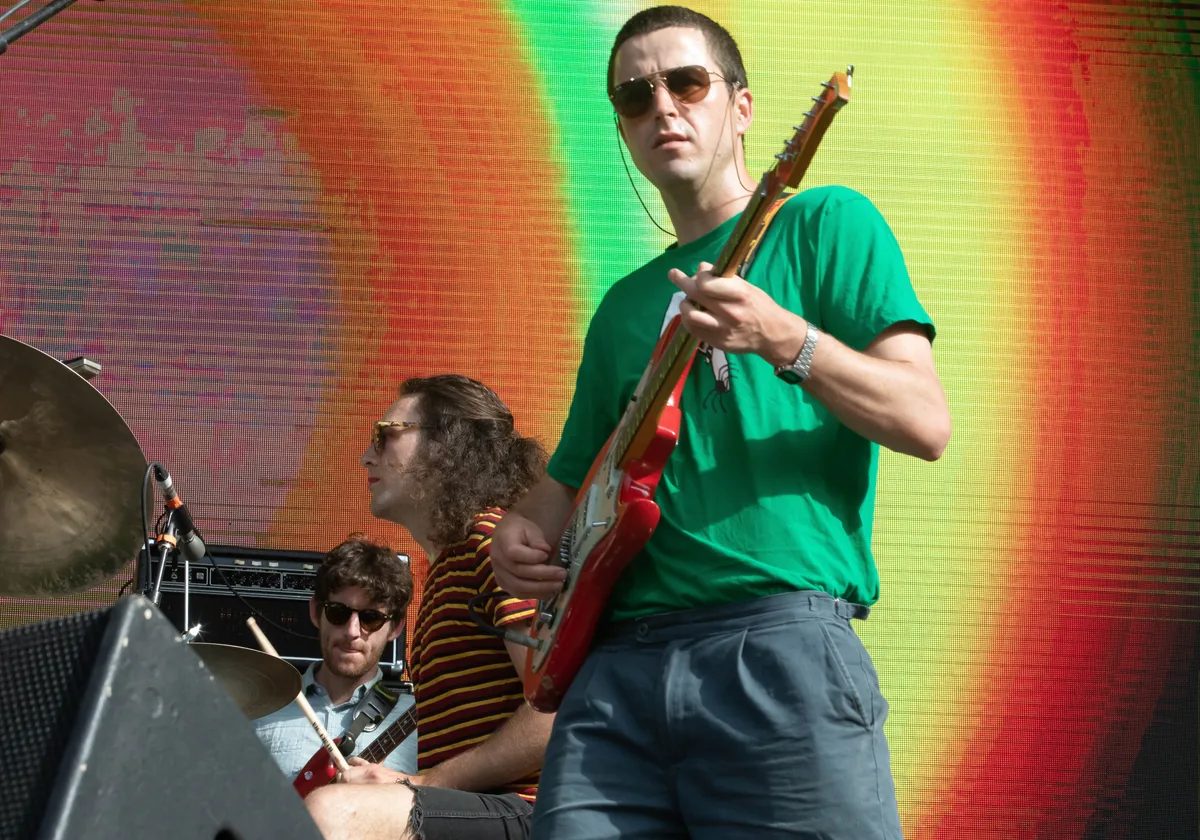
Psychedelic rock gives marketers abundant material: riffs, improvisation, studio experiments, visual symbolism and live energy. Abundance can also blur the campaign. If every poster contains a new universe and every caption describes a different influence, listeners cannot tell what this particular release offers. The practical task is to turn a wide sonic world into a recognizable trail.
The following plan covers one single, EP or album from a month before release to a month after it. For the principles shared across styles, use our music promotion by genre guide. Artists preparing industry outreach can also research fit through the psychedelic rock record label guide. Treat both as research tools, not lists to contact indiscriminately.
Find the record’s portal, not a generic psychedelic label
“Psychedelic” can mean compact garage songs, cosmic country, heavy fuzz, modular synth exploration, motorik repetition, progressive suites or live improvisation. Position the release with three coordinates: its rhythmic engine, its signature sound and the experience it offers. A useful sentence could be: “Motorik drums and detuned twelve-string guitars carry a seven-minute song about urban heat from tight verse cycles into a live, unedited coda.”
That statement gives a journalist a musical structure, a listener a mood and a video editor several moments to show. Add evidence: where it was recorded, whether the band tracked live, which instrument or technique shapes the arrangement and why the lyrics belong to the sound. Avoid claims such as “mind-altering” or “the future of rock” unless they appear as clearly attributed quotes.
Choose one visual rule that can expand without losing recognition. It might be solarized desert photography, hand-cut collage, liquid projection or stark geometric animation. Fix a palette and type system, then adapt them to covers, posters and clips. Psychedelic design can be dense, but the artist name, release date and action must remain readable.
Prepare a short edit map of the music before making content. Mark the first hook, the strongest riff, a texture change, a lyric, an instrumental peak and a live transition. Each campaign asset can then reveal a different route through the same recording.
Put promotion channels in this order
1. The band’s direct circle
Start with mailing-list readers, previous ticket buyers, Bandcamp followers, local supporters and people who have meaningfully engaged with earlier releases. Give them a specific invitation: watch the studio take, pre-order the pressing, attend the release show or reply with a favorite section. A direct message should feel like access, not an automated demand.
Build one durable release page containing artwork, date, formats, credits, lyrics where appropriate and every official destination. Bandcamp’s artist guide explains its follower, merchandise and discovery tools. Use precise genre and location tags, price physical products honestly and state shipping dates you can meet.
2. Full-length video and live evidence
Psychedelic rock often becomes clearer when viewers see the performance mechanics. Prioritize one complete live-room take, studio session, projection performance or carefully paced visualizer. A long track should not be forced into a misleading ten-second summary; use short excerpts to lead toward the complete piece.
Upload clean audio, identify the musicians and visual collaborators, add lyrics or chapters when useful and put the release link near the top of the description. YouTube’s official help page sets out how to create a Premiere. Use that feature only when you can gather listeners at a real time; otherwise a normal scheduled upload is simpler.
3. Specialist press, radio and scene connectors
Research outlets that already cover your branch of psychedelia: garage and psych shows, heavy music programs, vinyl channels, regional culture press, independent shops, festival bookers and blogs focused on experimental production. Match the angle to the outlet. A guitar publication may care about signal chain; local radio may care about the release concert; a vinyl channel may need pressing information.
Send a concise note with a private stream, release date, RIYL references, artwork, band photo and a clear request. State whether the track is radio clean and provide a downloadable WAV. Personalize from actual recent coverage rather than superficial praise. One thoughtful follow-up is enough unless the recipient replies.
4. Streaming editorial and profile conversion
Deliver final audio and metadata early. Spotify says artists can pitch one unreleased song at a time, and delivery at least seven days before release places the selected track in followers’ Release Radar; consult the current Spotify for Artists submission page. For a long-form project, pitch the track that opens the clearest door, not automatically the longest or most experimental piece.
Refresh the artist bio, images and links before any outreach lands. Describe instruments, recording approach, regional context and campaign activity accurately. Editorial selection is never guaranteed, so continue direct, video and radio work regardless of the submission outcome.
5. Short-form excerpts and paid discovery
Cut clips from the edit map: riff demonstration, drum pattern, tape manipulation, projection rehearsal, harmonized solo or the transition into an extended coda. Put context on screen immediately. Preserve the original performance speed and avoid pretending studio audio is a live capture. YouTube documents the platform’s current Shorts format and upload rules; verify specifications when exporting.
Paid media comes last because it works best after organic posts reveal a credible hook. Test distinct creative ideas rather than tiny variations in color. Send traffic to a page where visitors can hear, watch or buy without searching again.
D-30 to D+30: map the trip
D-30 to D-23 — establish the coordinates
Finalize audio, metadata, artwork, credits and the positioning sentence. Deliver through the distributor and verify artist mapping. Build the release page, electronic press kit and private stream. Record a complete performance if one does not exist. Create a research sheet with 20 to 30 well-matched press, radio, video, shop and local contacts, plus the evidence for each fit.
D-22 to D-16 — show the engine
Announce the date using the most immediate musical idea: a riff, groove or striking visual transition. Send advance pitches in small personalized groups. Submit the focus track to eligible editorial tools within their published timelines. Offer direct supporters a deeper item such as studio notes, a pre-order or first access to release-show tickets.
D-15 to D-8 — expand the world
Reveal a contrasting asset. If the announcement centered on heavy guitars, show the organ, percussion, lyrical concept or projection process. Publish the full video trailer and confirm premiere or upload details. Contact regional calendars and radio shows with enough time to schedule. Follow up only where the fit is strong, adding useful information rather than “just checking in.”
D-7 to D-1 — remove friction
Test every link and purchase path on a phone. Confirm release time, lyrics, credits, track order, product inventory and show details. Supply collaborators with the same core copy and properly sized assets. Send one clear reminder to the mailing list. Save at least one compelling musical turn for the released track instead of exhausting the narrative in previews.
D0 to D+7 — make the complete work central
Release day should point first to the music, not to a collage of reactions. Publish the complete video or performance, credit everyone and be available for comments or a scheduled chat. Share real editorial and radio support with attribution. Watch actions that indicate depth: full-video viewing, Bandcamp purchases, mailing-list joins, show responses, saves and direct replies.
During the first week, publish one explanatory piece: how a transition was arranged, how the projection was made, why the running order matters or what changed between demo and master. This gives listeners a reason to return without repeating the launch post.
D+8 to D+30 — build the live and archival tail
Release another facet: a rehearsal cut, isolated synth pass, lyric commentary, alternate mix or live coda. Approach slower radio and long-lead editorial contacts with the public link and any genuine developments. Connect the release to shows, record fairs or a collaborative session where possible. At D+30, archive assets, thank contacts and note which story produced meaningful attention for the next campaign.
€0 budget: make process the production value
Document what is already visually interesting: pedals, amps, tape machines, percussion, projection tests, hand-built artwork and the room where the band rehearses. Capture one performance with stable framing and the best audio available, then cut several excerpts from it. Write direct pitches, trade photography with a trusted peer and invite local supporters to a rehearsal stream. Do not compensate for limited money with mass messaging. Time spent matching ten contacts is more defensible than blasting a hundred addresses.
€100 budget: strengthen a single weak signal
Choose the gap that prevents belief. Spend on a live-session mix if the video looks good but sounds thin; commission a looping animation if the master has no visual doorway; pay a photographer for a focused rehearsal shoot; or run a small, time-limited creative test after one clip proves engaging. Keep the scope in writing and obtain reusable files. Avoid scattering the budget across boosted posts, dubious playlists and rushed merchandise.
€500 budget: create a reusable campaign centerpiece
One route is €300 for a well-recorded live video, €120 for multiple vertical and square edits and €80 for controlled promotion to relevant viewers. Another is a visual artist collaboration plus regional radio support and updated press photography. Select the mix based on the actual bottleneck, not a template. Require clear deliverables and never buy guaranteed streams or placements. Spotify’s explanation of artificial streaming warns that paid services promising streams or playlist placement violate platform terms and can lead to penalties.
Psychedelic rock campaign traps
- Using “psychedelic” as the entire pitch. Name the groove, instruments, structure, story and branch of the scene.
- Changing visual identity for every post. Variety should happen inside one recognizable system.
- Showing only effects pedals. Gear supports a musical idea; it is not the emotional reason to listen.
- Hiding a strong live band behind generic animation. Performance evidence can distinguish the release.
- Promoting an album as unrelated singles. Explain sequencing, motifs and the project’s larger arc.
- Sending long tracks without navigation. Offer the full work, but point busy recipients toward an accessible entry moment.
- Confusing paid reach with community. An impression is not a fan, buyer, attendee or editorial relationship.
Psychedelic rock release checklist
- Positioning names rhythm, signature sound and listener experience.
- The visual palette and typography stay recognizable across formats.
- Masters, metadata, lyrics, credits and product details are confirmed.
- One complete performance or visualizer is ready.
- Short clips reveal different parts of the edit map.
- Every press and radio target has a recorded reason for fit.
- Platform profiles and editorial submissions are current.
- All links, purchases and show details work on mobile.
- Paid work has transparent scope, rights and reporting.
- The D+30 review records meaningful actions and future relationships.
A good psychedelic rock campaign does not explain away the mystery. It establishes a recognizable portal, then gives listeners multiple depths to explore. When the assets, story and target list are complete, start a focused LISTN campaign to pursue relevant radio and professional attention without assuming a guaranteed outcome.