
Afrobeat is built for motion and resistance: interlocking guitars, horn lines, deep bass, percussion cycles and vocals that turn repetition into pressure. A strong label must understand that architecture while giving long tracks, large ensembles and politically direct writing enough space to land. The most useful catalogues connect the Nigerian foundations of the music with active bands, reissues, new studio work and audiences far beyond one scene.
These ten labels shape how Afrobeat is recorded, restored and heard in 2026. Each offers a distinct lesson in repertoire, production or long-term catalogue care for artists working with live rhythm sections and groove-led arrangements.
How the Afrobeat labels were selected
The ranking weighs current release activity, catalogue depth, specialist knowledge, artist development and the quality of each label's presentation. It rewards imprints that treat Afrobeat as a living band language, document the musicians behind the groove and maintain a clear route from physical editions to digital discovery. Recent releases matter alongside careful work on recordings that still define the genre.
Top 10 Afrobeat record labels
1. Record Kicks
Record Kicks leads with a current catalogue that connects Afrobeat's core ensemble discipline to soul, funk and new collaborations. Its work with Seun Kuti & Egypt 80 on Heavier Yet (Lays the Crownless Head), followed by expanded recordings with Kamasi Washington and Posdnuos, gave a major working band a focused international campaign. The Milan label also supports Savana Funk, The Liberators and other acts whose arrangements depend on real rhythmic conversation.
2. Strut Records
Strut Records combines archival intelligence with an ear for musicians who keep African jazz and funk in motion. Its editions involving Orlando Julius, Ebo Taylor, Pat Thomas and Mulatu Astatke show how strong annotation, restoration and sequencing can renew a catalogue without separating it from contemporary listening. Strut's advantage is context: its releases make the band, city, studio and musical lineage part of the record's identity.
3. Daptone Records
Daptone gives Afrobeat one of its strongest North American homes through Antibalas. The Brooklyn ensemble's long-form horn writing, locked guitar figures and muscular percussion helped establish that this music could grow through a committed touring band rather than surface imitation. Daptone's analogue studio culture and ensemble-first roster also create a natural conversation between Afrobeat, soul and instrumental funk, with musicianship remaining the centre of every campaign.
4. Soundway Records
Soundway Records is a deep source for West African dance music, linking meticulous reissues with contemporary records that carry those ideas forward. Its Nigerian and Ghanaian compilations map the exchange among Afrobeat, highlife, funk and disco, while artists such as K.O.G have kept the catalogue connected to new performance energy. Soundway demonstrates how regional research, excellent mastering and vivid design can make discovery feel coherent rather than random.
5. Analog Africa
Analog Africa approaches African groove music like field research with a dance-floor pulse. Releases including Afrobeat Airways, recordings by Rob and deep surveys of Benin's Orchestre Poly-Rythmo document the local scenes, players and studios behind every rhythm. Its booklets and licensing work are as important as the track selection. For artists, the label is a model of how precise cultural storytelling can add durable value to powerful music.
6. Mr Bongo
Mr Bongo has spent decades connecting Brazilian music, jazz, funk and African recordings through reissues, compilations and new signings. Its Afrobeat and Afro-funk selections sit inside a broader record-collector language, giving DJs and listeners useful paths between scenes. The label's strength is curation at scale: sleeves, liner notes, singles and albums all support discovery, while its distribution reach helps specialist music remain visible in shops and online.
7. Comet Records
Paris-based Comet Records holds a singular position through its sustained work with Tony Allen. Albums, live recordings and collaborative projects foreground the drummer's elastic timing and show why Afrobeat groove is never simply a loop. Comet also connects that legacy to jazz and electronic producers, allowing Allen's playing to enter new settings without losing its human push and pull. Its catalogue is essential production study for drummers and arrangers.
8. Philophon
Philophon builds records from close studio relationships with musicians in Ghana and across West Africa. Releases by Guy One, Alogte Oho, Florence Adooni and Jimi Tenor bring Frafra gospel, highlife, jazz and Afrobeat-adjacent rhythm into detailed analogue productions. The label's signature lies in the band sound: dry drums, insistent bass, bright horns and vocals captured with character. It offers a strong blueprint for developing local collaborations over multiple releases.
9. Glitterbeat Records
Glitterbeat expands Afrobeat's possibilities through globally minded, band-driven records. São Paulo ensemble Bixiga 70 is central to that story, combining dense percussion and horn arrangements with Brazilian rhythmic language and the structural influence of West African groove. The label supports adventurous albums as complete statements, giving instrumental groups room to develop texture and dynamics. Its catalogue rewards artists who want a wider frame without weakening the rhythm section.
10. Colemine Records
Colemine Records gives contemporary instrumental soul and funk a disciplined independent infrastructure. Ikebe Shakedown and The Sure Fire Soul Ensemble bring Afrobeat-informed guitar patterns, percussion and horn writing into concise records that work for DJs and live audiences. Colemine's coordinated singles, albums, house production style and physical distribution show how a focused label identity can help groove-heavy bands build recognition release by release.
Artist focus: Seun Kuti extends the language
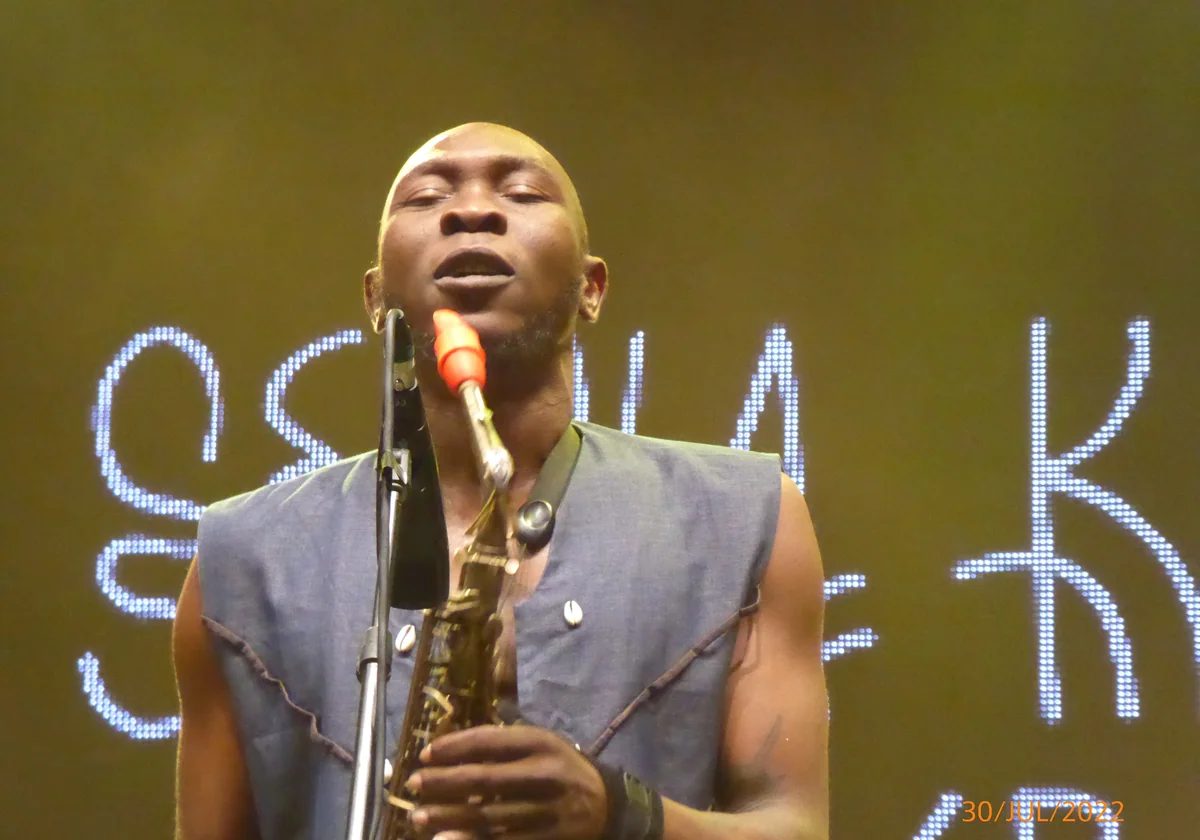
Seun Kuti treats Afrobeat as an active political and musical language rather than inherited repertoire. Leading Egypt 80, the band once directed by his father Fela Kuti, he works through clipped saxophone phrases, massed percussion and vocals that gather force over long arrangements. Black Times sharpened his international profile, while Night Dreamer Direct-to-Disc Sessions captured the physical precision of the touring band. The 2024 album Heavier Yet (Lays the Crownless Head) pushed that sound into collaborations with Damian Marley and Sampa the Great; its 2025 deluxe cycle added Kamasi Washington and Posdnuos. Seun remains relevant because the message and the groove develop together: every instrumental layer supports the song's argument, and the live ensemble retains the tension, patience and release that define Afrobeat at its best.
LISTN Afrobeat radio coverage
LISTN maps Afrobeat campaigns to its dance category. As of September 17, 2026, this category covers 1,513 distinct radio stations in 105 countries. The five largest country pools are the United Kingdom (218), Italy (161), the United States (118), Germany (115) and France (104).
Complete radio count by country
United Kingdom 218; Italy 161; United States 118; Germany 115; France 104; Netherlands 61; Spain 56; Australia 45; Canada 37; Belgium 36; Hungary 35; Romania 33; Portugal 26; Argentina 25; Brazil 24; Greece 22; Chile 18; Colombia 18; Switzerland 16; Poland 15; Ecuador 14; South Africa 14; Croatia 13; Mexico 13; Ireland 11; Uruguay 11; Austria 10; Bulgaria 10; Denmark 9; Russian Federation 9; Venezuela 9; Indonesia 8; Lithuania 8; Sweden 8; Norway 7; The Republic of North Macedonia 7; Ukraine 7; Bolivia 6; Finland 6; New Zealand 6; Nigeria 6; Bosnia and Herzegovina 5; Dominican Republic 5; Malta 5; Serbia 5; Slovakia 5; Turkey 5; Cyprus 4; Estonia 4; India 4; Israel 4; Luxembourg 4; Costa Rica 3; Ghana 3; Honduras 3; Kenya 3; Kosovo 3; Peru 3; Reunion 3; Slovenia 3; Tunisia 3; Afghanistan 2; Albania 2; Algeria 2; Aruba 2; Curaçao 2; Czech Republic 2; Japan 2; Latvia 2; Montenegro 2; Namibia 2; Nicaragua 2; Paraguay 2; Philippines 2; Puerto Rico 2; Sint Maarten (Dutch part) 2; Uganda 2; Zambia 2; Belize 1; Bonaire, Sint Eustatius and Saba 1; Cayman Islands 1; Cote D'Ivoire 1; Egypt 1; Fiji 1; Gibraltar 1; Guatemala 1; Guyana 1; Haiti 1; Hong Kong 1; Iraq 1; Isle of Man 1; Kazakhstan 1; Kyrgyzstan 1; Moldova 1; Oman 1; Pakistan 1; Qatar 1; Saint Lucia 1; Seychelles 1; Singapore 1; Suriname 1; Syrian Arab Republic 1; Taiwan 1; Thailand 1; United Arab Emirates 1.
Plan a focused Afrobeat campaign
Start with the arrangement's strongest entry point. Identify the lead vocal or horn statement, the section where the groove opens up and the edit that gives programmers a practical first listen. Supply the full version and a clean radio edit when the original runs long, but preserve enough development for the interlocking parts to make sense. Credits should name the band, featured voices, producer and key players consistently across artwork, metadata and the press note.
Use the United Kingdom, Italy, the United States, Germany and France as the largest LISTN pools for this category, then test territories where the band already has live, diaspora or specialist-radio signals. Give programmers two exact reference points and one sentence on the track's subject; avoid reducing a large ensemble to a generic “world music” pitch. Once the master, edit, credits and release links are aligned, build a focused LISTN campaign.
Cover image credit: Seun Kuti, photographed by Bunks at Festival das Musicas do Mundo 2022 via Wikimedia Commons, CC0.
