
Amapiano labels do more than distribute club tracks. The strongest operations connect producers, vocalists, dancers and DJs, then turn local scenes into durable catalogues. They understand the difference between private-school piano, soulful arrangements, bacardi-derived percussion and the harder sgija edge, while keeping the log drum at the centre of a record's physical impact.
These ten labels and imprints are shaping Amapiano in 2026 through active releases, artist development and distinctive creative networks. Each offers a different lesson in how South African dance music can grow without losing the community that made it.
How the Amapiano labels were selected
The ranking rewards a clear A&R identity, sustained release activity, recognisable artist relationships and influence on the genre's sound. Producer-led imprints score highly because Amapiano often develops through studio collectives, while larger companies earn a place when their infrastructure gives South African artists a stronger route to international audiences.
Top 10 Amapiano record labels
1. Piano Hub
Kabza De Small's Piano Hub is the genre's defining producer-led home. Its orbit links Kabza's expansive catalogue with Young Stunna, Mthunzi, MaWhoo and a deep bench of collaborators. The imprint's strength is musical continuity: long-form albums, vocal records and instrumental workouts all carry the warm chords, patient builds and low-end detail associated with Kabza's studio language.
2. New Money Gang Records
New Money Gang channels DJ Maphorisa's ability to move between underground club records and major crossover moments. Its releases connect established names, emerging vocalists and prolific producers without treating collaboration as a one-off marketing device. That networked approach mirrors how Amapiano actually moves: through sessions, DJ sets and combinations that can generate several records from one creative relationship.
3. Black Is Brown Entertainment
Mr JazziQ's Black Is Brown has become a reliable launchpad for the genre's youthful, percussion-forward side. Pcee, Justin99, Djy Biza and other close collaborators bring street-level energy, memorable chants and sharp rhythmic programming. The label is especially effective at turning a recognisable production camp into individual artist stories rather than leaving every release under one headline name.
4. Simnandi Records
DJ Jaivane's Simnandi Records represents the deeper, soulful end of Amapiano. The label's catalogue favours extended grooves, expressive keys and patient vocal arrangements built for complete DJ sets. Artists and producers including Muziqal Tone, Record L Jones and Slenda Vocals have helped make Simnandi a reference point for listeners who value musical development over a quick drop.
5. 18 Area Holdings
Focalistic's 18 Area Holdings connects Amapiano to Pretoria rap, fashion and ambitious visual campaigns. Focalistic's "President ya Straata" identity showed how local slang and rapper-led performance could sit naturally over piano production. The imprint's value lies in that crossover grammar: vocals remain rooted in place while the records are structured to travel through clubs, festivals and short-form video.
6. Thupa Industry
Busta 929 built Thupa Industry around a tougher, bass-heavy strain of Amapiano. His catalogues and collaborative projects prioritise muscular log drums, compact melodic phrases and the kind of loops that gain force inside a DJ sequence. The label gives this sound a consistent release identity while creating space for closely connected producers and vocalists to become visible in their own right.
7. Sound African Recordings
Sound African Recordings extends Major League DJz's international vision for Amapiano. The operation links club releases to the Balcony Mix platform, touring and filmed performance, making the DJ set itself part of the label story. Its strongest work presents Amapiano as a living performance culture rather than a playlist category, with guest artists entering a format audiences already recognise.
8. Wanitwa Mos Entertainment
Master KG's Wanitwa Mos Entertainment occupies the productive overlap between Amapiano, Afro-house and Limpopo-rooted pop. Nkosazana Daughter, Lowsheen and regular collaborators bring prominent melodies and vocal storytelling to rhythm-led records. That regional and stylistic breadth gives the label a clear advantage: songs can work in dance sets while retaining the voices and languages that make them culturally specific.
9. Amapiano Grooves
Amapiano Grooves provides a focused independent route for records made specifically for the scene. Its compilations and singles help DJs find functional club material beyond the most visible artist brands. A genre-centred label like this matters because it can respond quickly to changes in tempo, percussion and production style, while giving less established producers a catalogue context listeners immediately understand.
10. Universal Music South Africa
Universal Music South Africa brings scale to Amapiano without operating as a single-sound boutique. Its distribution, marketing and cross-border network have supported South African dance releases alongside broader African pop. The useful lesson is infrastructure: when a record is ready to move beyond its first club and social audience, coordinated radio, editorial, video and international release teams can extend its life.
Artist focus: Uncle Waffles turns the DJ booth into the song
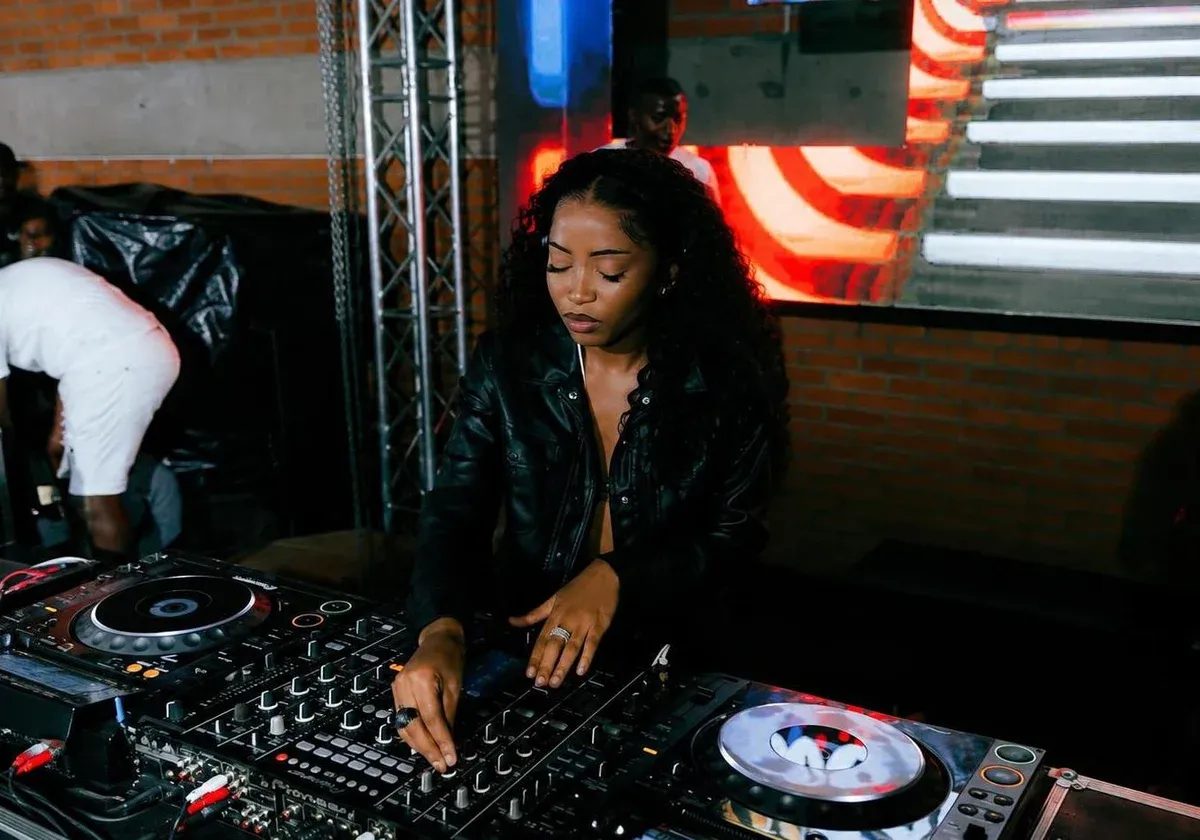
Uncle Waffles represents Amapiano as a performance language: rhythm, choreography, selection and crowd communication arrive together. Her sets move between vocal piano, harder log-drum passages and clean dramatic transitions, while her physical precision makes the booth part of the visual composition. The 2022 EP Red Dragon established that identity through "Tanzania"; Asylum followed in 2023 with the collaborative rush of "Yahyuppiyah," and Solace showed a more melodic, polished side later that year. Those projects matter because they convert the momentum of a touring DJ into authored recordings without separating her from the communal energy of a set. In 2026, Waffles remains a strong example of how an Amapiano artist can build globally through performance first, then use concise projects, recurring collaborators and recognisable movement to make every release feel connected.
LISTN Amapiano radio coverage
LISTN maps Amapiano campaigns to its dance category. As of September 17, 2026, this category covers 1,513 distinct radio stations in 105 countries. The five largest country pools are the United Kingdom (218), Italy (161), the United States (118), Germany (115) and France (104).
Complete radio count by country
United Kingdom 218; Italy 161; United States 118; Germany 115; France 104; Netherlands 61; Spain 56; Australia 45; Canada 37; Belgium 36; Hungary 35; Romania 33; Portugal 26; Argentina 25; Brazil 24; Greece 22; Chile 18; Colombia 18; Switzerland 16; Poland 15; Ecuador 14; South Africa 14; Croatia 13; Mexico 13; Ireland 11; Uruguay 11; Austria 10; Bulgaria 10; Denmark 9; Russian Federation 9; Venezuela 9; Indonesia 8; Lithuania 8; Sweden 8; Norway 7; The Republic of North Macedonia 7; Ukraine 7; Bolivia 6; Finland 6; New Zealand 6; Nigeria 6; Bosnia and Herzegovina 5; Dominican Republic 5; Malta 5; Serbia 5; Slovakia 5; Turkey 5; Cyprus 4; Estonia 4; India 4; Israel 4; Luxembourg 4; Costa Rica 3; Ghana 3; Honduras 3; Kenya 3; Kosovo 3; Peru 3; Reunion 3; Slovenia 3; Tunisia 3; Afghanistan 2; Albania 2; Algeria 2; Aruba 2; Curaçao 2; Czech Republic 2; Japan 2; Latvia 2; Montenegro 2; Namibia 2; Nicaragua 2; Paraguay 2; Philippines 2; Puerto Rico 2; Sint Maarten (Dutch part) 2; Uganda 2; Zambia 2; Belize 1; Bonaire, Sint Eustatius and Saba 1; Cayman Islands 1; Cote D'Ivoire 1; Egypt 1; Fiji 1; Gibraltar 1; Guatemala 1; Guyana 1; Haiti 1; Hong Kong 1; Iraq 1; Isle Of Man 1; Kazakhstan 1; Kyrgyzstan 1; Moldova 1; Oman 1; Pakistan 1; Qatar 1; Saint Lucia 1; Seychelles 1; Singapore 1; Suriname 1; Syrian Arab Republic 1; Taiwan 1; Thailand 1; United Arab Emirates 1.
Plan a focused Amapiano campaign
Identify the record's actual lane before outreach. A private-school production built on long harmonic movement needs a different pitch from a chant-led sgija track or an Afro-house crossover. Supply exact producer and vocalist credits, clean lyrics, a radio edit when the arrangement runs long, and a performance clip that shows how the key rhythmic moment lands with people.
Start with the United Kingdom, Italy, the United States, Germany and France as the largest LISTN pools for the dance category, then add South Africa, regional African markets and diaspora territories supported by listener or touring data. Give programmers one concise sonic reference, the strongest cultural detail and a direct streaming link. Once the metadata and assets agree, build a focused LISTN campaign.
Cover image credit: Uncle Waffles, photographed by Musiclaborotry in South Africa in 2022 via Wikimedia Commons, CC BY-SA 4.0, modified.
