
Blues labels still do work that broad streaming categories cannot: they connect regional traditions, distinctive players, specialist press, radio presenters, festivals and listeners who follow musicians across decades. The strongest teams also understand that contemporary blues can move through soul, rock, roots and Americana without losing the phrasing, tension and storytelling at its centre.
These ten active labels and label groups stand out in 2026 for current releases, coherent catalogues and practical contributions to artist development. The list combines institutions that preserve foundational recordings with independent teams building new audiences for guitarists, singers, harmonica players and bands. Each entry earns its position through a different strength.
How the blues labels were selected
Official artist pages, release catalogues, news sections and label stores were checked for recent activity. The assessment considered blues focus, roster identity, release consistency, physical and digital distribution, radio relationships, international reach and the ability to develop a recognisable campaign around an artist. Repository-wide title, slug and body checks found no existing LISTN article targeting the broad blues record-label query.
Top 10 blues record labels
1. Alligator Records
Alligator remains the clearest reference point for a dedicated modern blues label. Its catalogue links major figures with active artists including Tommy Castro, Marcia Ball, Shemekia Copeland and Christone “Kingfish” Ingram, while the label's presentation keeps albums, touring and artist stories connected. Its specialist knowledge of blues radio, international touring audiences and long campaign cycles gives Alligator the top position.
2. Delmark Records
Chicago's Delmark Records offers a direct bridge between living local culture and recorded history. Founded in 1953, it continues to release blues and jazz while maintaining a studio, events calendar, artist pages and a deep catalogue. For musicians rooted in ensemble playing, club performance and Chicago vocabulary, Delmark provides both archival credibility and an active contemporary platform.
3. Ruf Records
Ruf Records has built an international lane from Germany, using releases and the Blues Caravan touring format to move artists across European markets. Its 2026 activity includes a new Blues Caravan live project and work from Bernard Allison. Records, coordinated touring and a recognisable label identity support one another, making Ruf especially relevant for artists who treat Europe as a core market.
4. Provogue Records
Provogue brings blues and guitar-led music into a larger international system through Mascot Label Group. Its catalogue spans Joe Bonamassa, Warren Haynes, Eric Gales and players whose audiences overlap blues, rock and live-instrument culture. Premium physical formats, concert releases and global campaigns help the label scale a blues-rooted artist without losing the musicianship that attracts specialist listeners.
5. Stony Plain Records
Stony Plain has developed a durable Canadian perspective on blues and roots music. Featured releases from Eric Bibb, Duke Robillard, Colin James and Kenny “Blues Boss” Wayne balance acoustic storytelling, electric band craft and roots traditions. Its distribution relationship with IDLA gives the catalogue practical reach while preserving a curatorial identity that understands specialist blues audiences.
6. Fat Possum Records
Fat Possum changed how North Mississippi blues reached listeners by building campaigns around singular voices and regional character. The company has expanded into a broad independent roster, yet its blues collection remains central to its identity. That wider infrastructure now brings blues recordings into contact with indie and alternative audiences while preserving the personality that made the source material matter.
7. VizzTone Label Group
VizzTone gives independent blues releases a shared promotional and distribution platform. Its 2026 artist page documents activity from Dani Wilde, Bob Corritore, Kirk Fletcher and 11 Guys Quartet, following recent work by Will Wilde, Erin Harpe and Ben Levin. Each musician keeps a distinct identity while benefiting from a group that already speaks to blues media and radio.
8. Gulf Coast Records
Founded by guitarist and producer Mike Zito, Gulf Coast Records is built close to the working blues circuit. Its pages connect electric blues, soul, funk and blues-rock through artists including Albert Castiglia, Diana Rein and Odds Lane. Studio decisions, touring realities and audience expectations are treated as parts of the same career, giving the label a practical musician-led perspective.
9. Forty Below Records
Forty Below combines blues authority with a wider roots catalogue. Its current artist page includes Charlie Musselwhite, Sugaray Rayford, Danielle Nicole, Philip Sayce, Dom Martin and the continuing work of John Mayall. Veteran voices, powerful vocal records and adventurous collaborations can reach adjacent roots audiences while the roster's strongest names maintain clear blues credibility.
10. Nola Blue Records
Nola Blue closes the ranking with a focused mission: preserve the legacy of traditional blues artists while supporting contemporary talent. Curtis Salgado's Legacy Rewind: Live in '25 and the Anthony Paule Soul Orchestra show how blues, soul, R&B and live performance reinforce one another. Its editorial care suits artists whose work depends on lineage, song interpretation and seasoned ensemble playing.
Artist focus: Christone Ingram carries the Delta forward
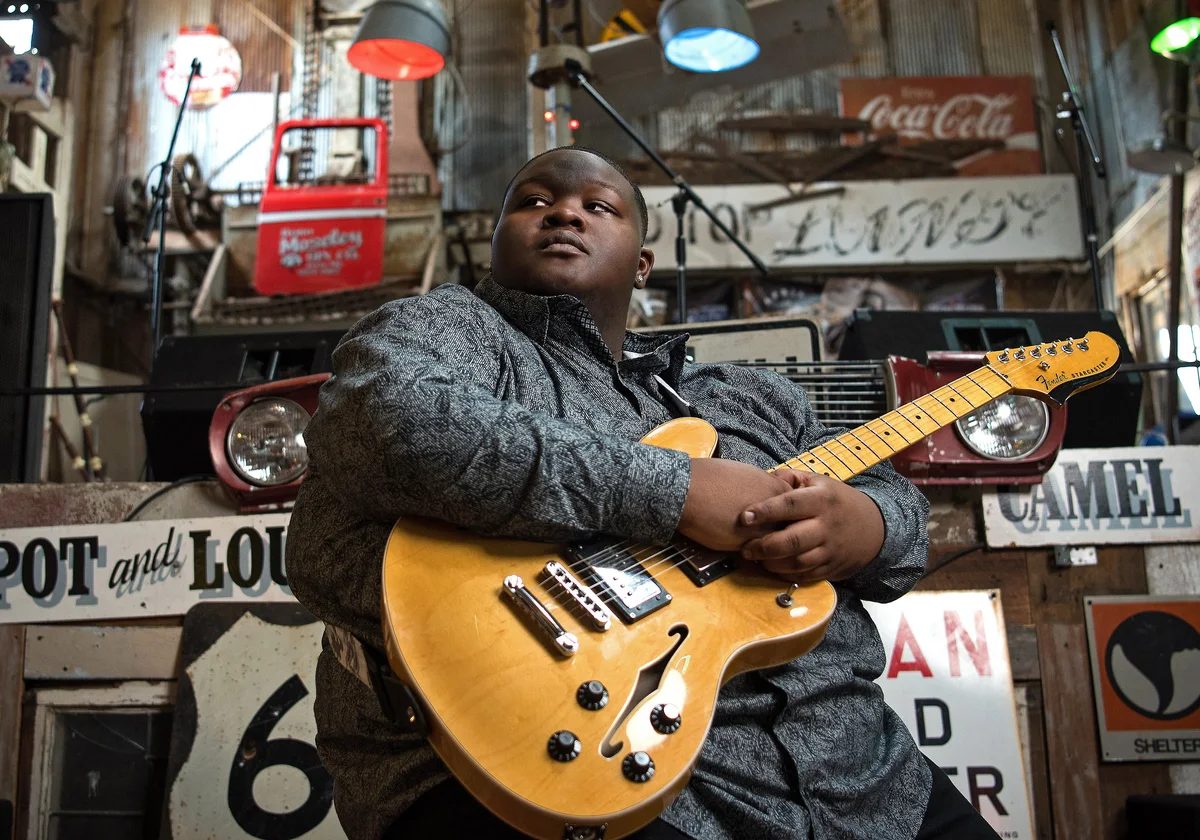
Christone “Kingfish” Ingram represents contemporary blues because his music treats tradition as a working language. Raised in Clarksdale, Mississippi, he combines a heavy, vocal-like guitar tone with singing that moves from restraint to force inside the same phrase. His debut Kingfish established that vocabulary; 662 sharpened the connection between Delta identity, modern songwriting and expansive production; and Live in London showed how his arrangements grow through stage dynamics rather than extended solos alone. His current Hard Road project adds a reflective chapter while keeping the attack and emotional clarity that made the earlier records immediate. Ingram reaches younger rock and soul listeners without presenting blues as costume. The useful lesson for emerging artists is specificity: geography, tone, phrasing, visual identity and repertoire all point to the same musician.
LISTN blues radio coverage
LISTN maps blues campaigns to its blues category. For the 2026 campaign map, this category covers 393 distinct radio stations in 63 countries. The five largest blues pools are the United Kingdom (82), the United States (75), Italy (27), Australia (24) and Germany (19).
Complete radio count by country
United Kingdom 82; United States 75; Italy 27; Australia 24; Germany 19; France 16; Canada 14; Netherlands 13; Spain 13; Colombia 10; Belgium 6; Brazil 5; Mexico 5; New Zealand 5; Portugal 4; South Africa 4; Switzerland 4; Argentina 3; Croatia 3; Estonia 3; Ghana 3; Greece 3; Namibia 3; Chile 2; Hungary 2; India 2; Indonesia 2; Ireland 2; Kenya 2; Norway 2; Poland 2; Uruguay 2; Angola 1; Aruba 1; Austria 1; Bolivia 1; Bulgaria 1; Costa Rica 1; Curaçao 1; Denmark 1; Dominica 1; Dominican Republic 1; Ecuador 1; Fiji 1; Finland 1; Honduras 1; Hong Kong 1; Lithuania 1; Luxembourg 1; Mauritius 1; Morocco 1; Nicaragua 1; Peru 1; Puerto Rico 1; Romania 1; Saint Lucia 1; Serbia 1; Seychelles 1; Slovakia 1; Taiwan 1; Tunisia 1; Turkey 1; Venezuela 1.
Build a blues campaign around performance identity
A useful blues pitch starts with the detail a presenter can hear immediately: the singer's phrasing, guitar or harmonica tone, rhythm feel, regional vocabulary or story inside the lyric. Name that feature in one sentence, then support it with accurate musician and producer credits, a clean radio edit when appropriate, strong live footage and a concise note about the song's place in the artist's catalogue. Match the recording to electric, acoustic, soul-blues, blues-rock or traditional programmes instead of submitting under one broad genre label.
The United Kingdom, United States, Italy, Australia and Germany offer the largest LISTN blues station pools, while the full map supports territory-by-territory testing across Europe, the Americas, Africa and Asia-Pacific. Use those differences to sequence outreach, observe which framing earns attention and build a focused LISTN campaign around the stations whose programming fits the performance.
Cover image credit: Christone “Kingfish” Ingram, photographed by Rory Doyle via Wikimedia Commons, CC BY-SA 4.0, modified.
