
Contemporary classical music thrives where written composition, improvisation, electronics, acoustic detail and strong visual worlds meet. The labels that matter most do more than release quiet piano records: they help composers and performers build a language that can travel between concert halls, clubs, film, installations, radio and focused digital listening.
These ten active labels stand out in 2026 for coherent curation, current releases and the ability to give adventurous work a durable context. The ranking weighs artistic identity, production standards, composer development, international reach and each label's record of connecting new music with listeners beyond conventional classical channels.
How the contemporary classical labels were selected
Official catalogues, artist pages, release listings and current event programmes were checked for active work. Each label needed a distinct reason to matter now, whether through post-genre commissioning, artist-led production, new-composer infrastructure, high-end recording or a convincing bridge between acoustic and electronic practice. A repository-wide intent review found no LISTN article targeting the contemporary-classical label query; the existing classical, ambient and soundtrack guides answer different searches.
Top 10 contemporary classical record labels
1. Erased Tapes
Erased Tapes remains the clearest independent reference point for emotionally direct composition that refuses a fixed border between ensemble writing, piano, voice and electronics. Its artist list links Nils Frahm, �lafur Arnalds, Hatis Noit, Penguin Cafe, Rival Consoles and Tristan Perich without flattening their differences. The label leads because its artwork, live network and long catalogue arcs make experimental detail legible to a broad audience.
2. LEITER
LEITER gives artist-led contemporary composition an unusually tactile home. Co-founded by Nils Frahm, it treats studio craft, physical editions, live performance and collaborative releases as parts of the same practice. Frahm's Paris, Day and Night projects show how the label can move between large-scale performance and intimate piano work while preserving dynamics, room tone and a recognisable editorial design.
3. New Amsterdam Records
New Amsterdam is built around post-genre composers and performers rather than a narrow sonic formula. Its nonprofit model extends from records into concert presenting, network building and career support. A busy 2026 slate including Francesca Gaza's Crown Shyness, Andrew Yee's Trans Requiem, WATERBODIES and Wild Up's Julius Eastman series demonstrates why it matters: formally ambitious music receives context, community and sustained advocacy.
4. Bedroom Community
Bedroom Community celebrates twenty years in 2026 with the same collective logic that Valgeir Sigur�sson, Nico Muhly and Ben Frost established in Reykjav�k. Greenhouse Studios is central to its identity: composition, engineering and collaboration develop in the same orbit. The catalogue rewards artists whose work crosses orchestral writing, electronics, theatre and sound art, with production choices serving the score rather than smoothing away its tensions.
5. Mercury KX
Mercury KX specialises in contemporary instrumental music designed for close listening without losing scale. Its current releases from Jessie Marcella, Lara Somogyi and SAGES combine piano, harp, strings, ambience and detailed sound design. The label is particularly effective when a project has an immediate sonic signature and a visual world that can translate across streaming, spatial audio, live sessions and short-form discovery.
6. Deutsche Grammophon
Deutsche Grammophon brings global production and distribution to contemporary composers who can hold both concert and cultural attention. Its catalogue activity around Hildur Gu�nad�ttir, Max Richter, J�hann J�hannsson, Steve Reich and emerging pianist-composers places new work beside the classical canon without treating it as a side category. The advantage is scale: orchestras, premium editions, film connections and international media can reinforce one composition-led campaign.
7. ECM New Series
ECM New Series offers one of the most recognisable recording philosophies in modern composition. Space, silence and instrumental colour are structural elements, not decorative polish. Its relationships with Arvo P�rt, Meredith Monk, Tigran Mansurian and many chamber performers have created patient catalogue listening rather than release-week churn. It suits work whose authority depends on interpretation, acoustic precision and a complete album sequence.
8. Nonclassical
Nonclassical keeps new composition connected to clubs, experimental electronics and artist development. Its 2026 programme spans the Outside the Lines compilation, Nneka Cummins, Max Syedtollan, WACK, lovemusic and development partnerships with Baltic ATM. That activity gives early-career composers room to test formats in public. The label's value lies in treating performance context and community as seriously as the finished recording.
9. Innova Recordings
Innova Recordings supports creator-led new music across chamber composition, electroacoustic work, improvisation and cross-cultural projects. Current catalogue entries such as Sarvin Hazin and Kimia Hesabi's Neera show how specific instrumentation, identity and multimedia ideas can remain central to the release story. Innova is a strong home for projects that need thoughtful documentation and artistic autonomy more than a predetermined house sound.
10. Gondwana Records
Gondwana closes the list from the fertile edge between contemporary classical, ambient and modern jazz. The label's catalogue has helped piano-led and ensemble artists reach listeners who care about atmosphere but still expect compositional movement and live musicianship. Its strength is sequencing a wider scene: a carefully produced solo or chamber project can sit beside exploratory bands while retaining its own melodic and textural identity.
Artist focus: Nils Frahm expands the piano's physical world
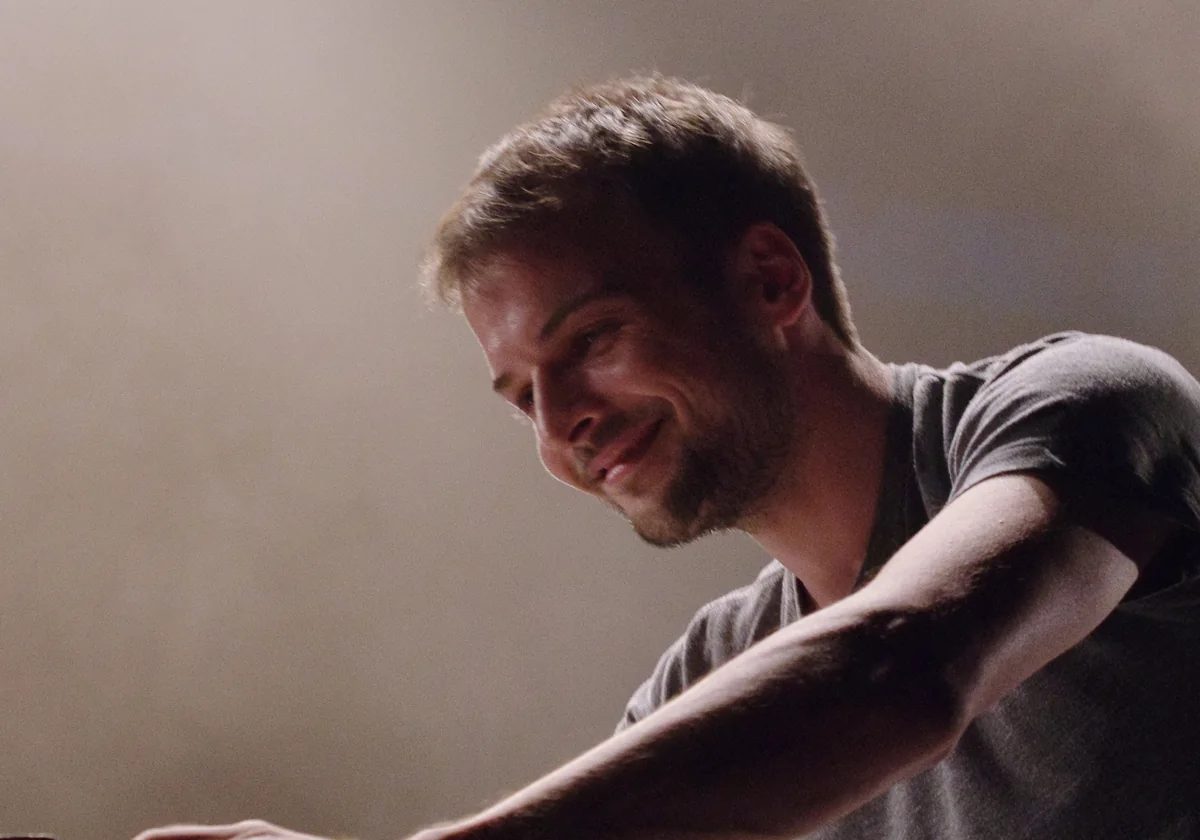
Nils Frahm represents contemporary classical music as a practice of composition, performance and instrument design. His signature comes from the friction between close-miked piano detail, harmonium, tape, analogue electronics and the physical mechanics of a room. Music for Animals stretched that language into long, patient forms; the live album Paris captured how he builds architectural momentum on stage; and the paired solo-piano releases Day and Night returned attention to touch, resonance and silence. Frahm remains relevant because each project changes the listening conditions rather than merely repeating a successful mood. He can make a large hall feel intimate, then let a small mechanical sound become structural. That combination of compositional control and curiosity explains why his work continues to connect modern-classical audiences with electronic, ambient and experimental listeners.
LISTN contemporary classical radio coverage
LISTN maps Contemporary Classical campaigns to its classical category. For the 2026 campaign map, this category covers 11 distinct radio stations in 10 countries. The five largest pools are the United Kingdom (2), Australia (1), Belgium (1), Bolivia (1) and Chile (1).
Complete radio count by country
United Kingdom 2; Australia 1; Belgium 1; Bolivia 1; Chile 1; Costa Rica 1; Haiti 1; Peru 1; South Africa 1; United States 1.
Build the campaign around a specific listening proposition
A useful pitch names the compositional idea a presenter can hear: prepared-piano resonance, a chamber ensemble processed in real time, a score built from field recordings, a new tuning system or a sequence designed around one acoustic space. Support that sentence with precise performer, composer, producer, engineer, studio and instrumentation credits. A short live video should confirm that the recorded identity can exist beyond the master.
Select one focus track with a clear opening minute, then match the project to programmes that already support new composition, ambient work, experimental electronics or modern chamber music. The United Kingdom provides the largest LISTN classical pool, while the ten-country map allows carefully staged outreach across several regions. Artists can build a focused LISTN campaign around stations whose programming fits both the composition and its presentation.
Cover image credit: Nils Frahm, photographed by Smial via Wikimedia Commons, Free Art License 1.3, modified.
_IMGP4651_smial_wp.jpg)