
Dance-pop succeeds when a song can command a club system and still communicate immediately through a vocal, melody or lyrical idea. These ten labels stand out through active rosters, recent releases and a durable ability to move records between streaming, radio, clubs and live performance.
Finish the song and the dance record
A competitive dance-pop master needs more than a loud drop. Make the vocal intelligible, give the chorus a distinct melodic shape and ensure the groove works before added layers arrive. Prepare an extended mix only when DJs can use it. Labels will also expect cleared samples, accurate songwriting splits and a convincing visual identity.
Representative artist: Lady Gaga
Lady Gaga remains a defining dance-pop artist because she treats the club track, the vocal performance and the visual concept as one composition. The Fame established that approach through precise synth hooks and instantly legible choruses; Born This Way expanded it with house, electro and rock pressure. Chromatica returned her writing to continuous dance-floor momentum, while 2025's Mayhem moved between industrial textures, disco, funk and maximal pop without losing rhythmic focus. Songs including Bad Romance, Rain on Me and Disease show how a distinctive vocal character can survive dense production and large-scale arrangements. Her current relevance is practical for developing artists: every era has a recognisable sound, silhouette and emotional premise, yet the chorus still carries the record. That balance between authorship and accessibility is the central discipline of dance-pop.
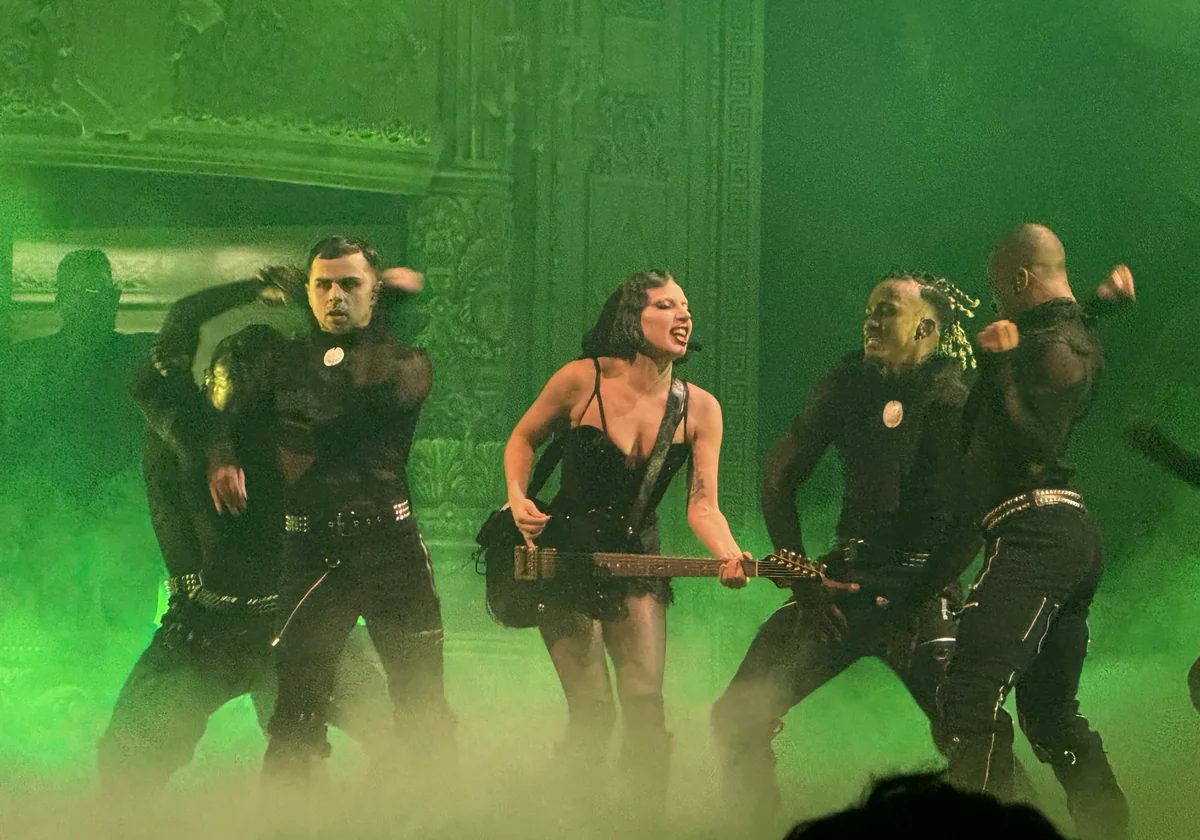
Cover: Lady Gaga performing Garden of Eden during The Mayhem Ball in Los Angeles in July 2025. Photo by kandl, via Wikimedia Commons, CC BY 4.0, modified.

Top 10 dance-pop record labels
1. Interscope Records — contemporary pop built at full scale
Interscope Records leads the current dance-pop conversation through releases that unite strong artistic worlds with global distribution. Lady Gaga's Mayhem gives the label a major 2025 reference point: electronic production, theatrical vocals and club-focused arrangements operate as one campaign. Interscope is most relevant to artists who already have finished songs, a coherent audience story and a visual language strong enough to support several singles rather than one isolated track.
2. Atlantic Records — pop experimentation with lasting reach
Atlantic Records has shown how adventurous electronic pop can become a broad cultural event. Charli xcx's Brat era connected abrasive synth choices, direct writing, club collaborations and an unmistakable visual system; Ava Max represents a more streamlined route built around compact choruses and high-energy production. The lesson for artists is not to split experimentation from communication. Atlantic-level dance-pop needs an immediate identity and enough songwriting discipline to travel beyond specialist electronic audiences.
3. RCA Records — performance-first modern pop
RCA Records is especially visible through artists who can make choreography, personality and rhythmic production reinforce each other. Tate McRae's 2025 album So Close to What sharpened that model with clipped hooks, detailed vocal production and songs designed to carry into live performance. RCA also spans alternative pop and rap-informed rhythm through a wider roster. A credible submission or development pitch should demonstrate a repeatable artist proposition, not merely a technically polished dance instrumental with a guest vocal.
4. Warner Records — durable dance-pop songwriting
Warner Records offers one of the clearest recent examples of long-cycle dance-pop development through Dua Lipa. Future Nostalgia turned disco references into modern pop architecture, while Radical Optimism extended that identity through live-feeling rhythm and psychedelic colour. The catalogue shows why the chorus, vocal tone and artist perspective must remain recognisable across different producers. Warner is a benchmark for acts building a multi-release career around songs that work on radio, streaming platforms and large stages.
5. Republic Records — vocal-led pop with electronic range
Republic Records connects some of the largest vocal artists in pop with production that moves freely through house, synth-pop, R&B and disco. Ariana Grande's Eternal Sunshine cycle demonstrates controlled vocal layering over clean, economical grooves, while The Weeknd's catalogue shows how a darker electronic palette can still produce immediate pop records. Artists should study the restraint in those arrangements: the production creates movement and atmosphere without competing with the central vocal identity.
6. Columbia Records — crossover records with individual character
Columbia Records remains important where dance-pop meets producer-led club music and emerging pop authorship. Calvin Harris supplies a long record of translating house structures into concise vocal singles, while Addison Rae's 2025 album Addison brought a more atmospheric, personality-driven version of electronic pop into the mainstream. The label's range makes imitation a weak strategy. A suitable project needs a clear voice, finished masters and a credible reason for its production choices beyond current playlist fashion.
7. Capitol Records — bold hooks and visual clarity
Capitol Records has repeatedly supported pop campaigns where bright electronic production and strong imagery arrive together. Katy Perry's catalogue demonstrates the value of compressed concepts and choruses that register on first listen; Troye Sivan's Something to Give Each Other shows a more intimate route through house rhythm, desire and carefully directed visuals. For artists, the common requirement is clarity. The song title, chorus, performance style and campaign image should all express the same central idea.
8. Polydor Records — British pop with club fluency
Polydor Records is a strong home for British dance-pop that respects both vocal craft and club culture. Becky Hill's catalogue is a practical model: powerful singing remains central while production can move through house, drum and bass and festival-scale dance. Polydor's wider pop history gives it room to develop artists beyond a single tempo or subgenre. Producers approaching this level need original songs, properly cleared collaborations and a live proposition that makes the vocalist more than a feature credit.
9. BMG — established voices with independent leverage
BMG offers established dance-pop artists substantial infrastructure within a partnership-led model. Kylie Minogue's Tension and Tension II cycles combine her recognisable voice with contemporary synth production, concise hooks and carefully sequenced campaign extensions. The fit is strongest for artists with proven creative direction, a known audience and an evidence-based next step.
10. Ultra Records — dance expertise with pop accessibility
Ultra Records approaches dance-pop from the electronic side through DJs, producers and vocal collaborators capable of crossing into radio. Artists working between house and pop should send a decisive original, a strong topline and clean rights information. The production must compete in a DJ set while remaining memorable away from the drop.
LISTN dance-pop radio coverage
LISTN maps dance-pop campaigns to its dance category. As of September 14, 2026, this category covers 1,513 distinct radios across 105 countries. The five leading countries are the United Kingdom (218), Italy (161), the United States (118), Germany (115) and France (104).
Complete radio count by country
United Kingdom: 218; Italy: 161; United States: 118; Germany: 115; France: 104; Netherlands: 61; Spain: 56; Australia: 45; Canada: 37; Belgium: 36; Hungary: 35; Romania: 33; Portugal: 26; Argentina: 25; Brazil: 24; Greece: 22; Chile: 18; Colombia: 18; Switzerland: 16; Poland: 15; Ecuador: 14; South Africa: 14; Croatia: 13; Mexico: 13; Ireland: 11; Uruguay: 11; Austria: 10; Bulgaria: 10; Denmark: 9; Russian Federation: 9; Venezuela: 9; Indonesia: 8; Lithuania: 8; Sweden: 8; Norway: 7; The Republic Of North Macedonia: 7; Ukraine: 7; Bolivia: 6; Finland: 6; New Zealand: 6; Nigeria: 6; Bosnia and Herzegovina: 5; Dominican Republic: 5; Malta: 5; Serbia: 5; Slovakia: 5; Turkey: 5; Cyprus: 4; Estonia: 4; India: 4; Israel: 4; Luxembourg: 4; Costa Rica: 3; Ghana: 3; Honduras: 3; Kenya: 3; Kosovo: 3; Peru: 3; Reunion: 3; Slovenia: 3; Tunisia: 3; Afghanistan: 2; Albania: 2; Algeria: 2; Aruba: 2; Curaçao: 2; Czech Republic: 2; Japan: 2; Latvia: 2; Montenegro: 2; Namibia: 2; Nicaragua: 2; Paraguay: 2; Philippines: 2; Puerto Rico: 2; Sint Maarten (Dutch part): 2; Uganda: 2; Zambia: 2; Belize: 1; Bonaire, Sint Eustatius and Saba: 1; Cayman Islands: 1; Cote D'Ivoire: 1; Egypt: 1; Fiji: 1; Gibraltar: 1; Guatemala: 1; Guyana: 1; Haiti: 1; Hong Kong: 1; Iraq: 1; Isle Of Man: 1; Kazakhstan: 1; Kyrgyzstan: 1; Moldova, Republic of: 1; Oman: 1; Pakistan: 1; Qatar: 1; Saint Lucia: 1; Seychelles: 1; Singapore: 1; Suriname: 1; Syrian Arab Republic: 1; Taiwan, Province of China: 1; Thailand: 1; United Arab Emirates: 1.
Plan a focused dance-pop campaign
Lead with the song's specific strengths: vocal identity, chorus, tempo, production reference points and the audience already responding. Supply a lossless master, instrumental, clean version where relevant, accurate credits and written confirmation for every sample or featured performance. Prioritise stations already programming contemporary pop, dance and electronic crossover in the leading countries above, then adapt each pitch to recent shows and rotation. When the song, artist story and target audience align, build a focused LISTN campaign.