
Dream pop turns atmosphere into songwriting. A blurred guitar, suspended keyboard chord or distant vocal matters only when it creates a world around a memorable song. The labels that understand this balance do more than collect hazy records: they give artists enough time, visual continuity and production freedom to make subtle music travel across albums, radio, touring and physical formats.
These ten active labels stand out in 2026 for their dream-pop catalogues, current artist development, distinct curation and ability to connect immersive music with listeners beyond its first scene.
How the dream pop labels were selected
The ranking weighs recent release activity, enduring genre influence, identifiable artist relationships and the practical strength of each label's release system. Dream pop overlaps with shoegaze, indie pop, ambient music and psychedelia, but the order favours labels that repeatedly support melody, texture and emotional detail as parts of one artistic language.
Top 10 dream pop record labels
1. Sub Pop
Sub Pop earns the top position through its long partnership with Beach House and its ability to present deeply atmospheric music on an international scale. The label has supported the Baltimore duo from Teen Dream through Bloom, Depression Cherry, 7 and Once Twice Melody, allowing each campaign to have its own visual architecture and pace. That continuity shows how patient catalogue building, ambitious physical editions and worldwide touring can amplify dream pop without flattening its mystery.
2. 4AD
4AD helped establish the visual and sonic vocabulary that still frames dream pop. Cocteau Twins made voice function as texture and melody at once; Lush joined luminous guitars to concise pop construction; Blonde Redhead later extended that sensibility into art rock and electronic detail. The label's sleeve design, sequencing and album-first identity gave ethereal music a concrete cultural home. Its continuing emphasis on singular artists keeps that lineage useful rather than merely historical.
3. Dead Oceans
Dead Oceans demonstrated the value of mature artist development when it became the home for Slowdive's modern chapter. The band's self-titled return and everything is alive preserve the glide of layered guitars while introducing cleaner electronics, deeper low end and writing shaped by decades of experience. The campaigns connect a foundational group with younger listeners without treating revival as nostalgia. For dream-pop artists, that is a strong model for reactivation, catalogue context and new work carrying equal weight.
4. Bella Union
Bella Union has an unusually direct connection to dream pop through co-founder Simon Raymonde of Cocteau Twins and an artist-led approach to adventurous records. Its catalogue has included early Beach House releases, Mercury Rev's widescreen psychedelia and Lanterns on the Lake's orchestral intimacy. Bella Union's strength is the space it gives albums to establish tone through artwork, sequencing and sustained press narratives. The result is a home for music that gains impact through immersion rather than instant maximalism.
5. Captured Tracks
Captured Tracks connects dream pop's softened edges with the momentum of independent guitar music. Wild Nothing's melodic precision, DIIV's increasingly forceful shoegaze and the label's carefully restored reissues create a dialogue between contemporary scenes and overlooked catalogues. Its releases often begin with a strong sonic identity but are built to survive beyond a single aesthetic moment. That combination of discovery, archival care and direct-to-fan culture makes Captured Tracks especially relevant to artists developing a recognisable world over several records.
6. Sonic Cathedral
Sonic Cathedral operates close to the live energy of shoegaze while making room for dream pop's melodic and electronic possibilities. Releases from bdrmm, Whitelands and deary show different ways to handle scale: rhythmic electronics, enveloping guitar layers and intimate songs that bloom into noise. The label's focused identity helps new acts reach listeners who actively follow texture-driven music. It also treats remixes, limited physical editions and scene relationships as meaningful extensions of a record rather than peripheral merchandise.
7. Slumberland Records
Slumberland's catalogue proves that dream pop can be bright, economical and rhythmically alert. The Pains of Being Pure at Heart paired distortion with immediate choruses, while groups such as Peel Dream Magazine and Lightheaded explore softer focus from different generations. The label's curation links DIY guitar pop, noise pop and dreamier writing without forcing them into one production template. Its community-scale credibility is particularly valuable for artists whose audience grows through specialist radio, record shops and word of mouth.
8. Kranky
Kranky sits at dream pop's most spacious boundary, where songs dissolve into ambient sound without losing emotional direction. Grouper's hushed voice and weathered recording textures, Deerhunter's early atmospheric experiments and the label's broader drone catalogue reward close listening. Kranky's reason for inclusion is its commitment to scale and silence: it gives quiet, formally unusual records a durable context. For artists working beyond conventional singles, that catalogue demonstrates how a precise curatorial identity can become its own route to discovery.
9. Mexican Summer
Mexican Summer is strongest where dream pop meets psychedelia, private-world songwriting and experimental production. The label's history with Tamaryn, Connan Mockasin and Jessica Pratt shows an appetite for artists whose atmosphere comes from distinctive performance choices rather than a preset wash of reverb. Its cross-disciplinary presentation also suits records tied closely to film, design or place. That breadth gives dream-pop-adjacent artists room to develop unusual campaigns while remaining connected to an identifiable independent audience.
10. Labrador Records
Stockholm's Labrador Records brings Scandinavian clarity to dream pop and indie pop. The Radio Dept. combine soft vocals, guitar haze, samples and sharp political observation, while the wider catalogue favours elegant melodies and carefully controlled arrangements. Labrador earns its place because its identity is audible without making its artists interchangeable. It offers a useful model for labels working with modest rosters: consistent design, selective releases and long-term international listeners can give understated music a reach far beyond its home market.
Artist focus: Beach House makes atmosphere feel inevitable
Beach House, the duo of Victoria Legrand and Alex Scally, defines modern dream pop through repetition, restraint and unmistakable tone. Teen Dream brought organ, slide guitar and Legrand's resonant voice into sharper melodic focus; Bloom expanded that language into sweeping, patiently unfolding songs; Once Twice Melody used self-production, strings and a chaptered release to create a larger cinematic arc. The duo's signature lies in motion inside apparent stillness: small chord changes, drum-machine pulses and vocal turns accumulate until a chorus feels physically expansive. That method remains relevant because it resists both lo-fi imitation and generic ambience. Beach House shows that texture becomes durable when every sound supports melody, pacing and a coherent visual world, giving radio programmers and listeners a clear identity to return to across album cycles.
LISTN dream pop radio coverage
LISTN maps Dream Pop campaigns to its indie category. As of September 18, 2026, this category covers 32 distinct radio stations in 17 countries. The five largest country pools are the United States (6), Italy (5), the United Kingdom (5), Bolivia (2) and Chile (2).
Complete radio count by country
United States 6; Italy 5; United Kingdom 5; Bolivia 2; Chile 2; Australia 1; Belgium 1; Bulgaria 1; Canada 1; Ecuador 1; France 1; Germany 1; Indonesia 1; Ireland 1; Netherlands 1; South Africa 1; Thailand 1.
Build a focused dream pop campaign
Lead with the song's defining contrast: intimate vocal against large guitars, mechanical rhythm against human drift, or a bright melody inside darker production. Supply clean metadata, a high-quality master, concise artist context and visuals that belong to the same world. If the album version takes time to unfold, prepare a radio edit that preserves the emotional arrival rather than simply cutting the opening bars.
The United States, Italy and the United Kingdom provide the largest LISTN pools for indie, while Bolivia and Chile create concentrated routes into Latin American discovery. Match each pitch to stations already supporting atmospheric guitar music, independent pop or related electronic textures. Then build a focused LISTN campaign around the territories where the song, audience data and release schedule offer a credible connection.
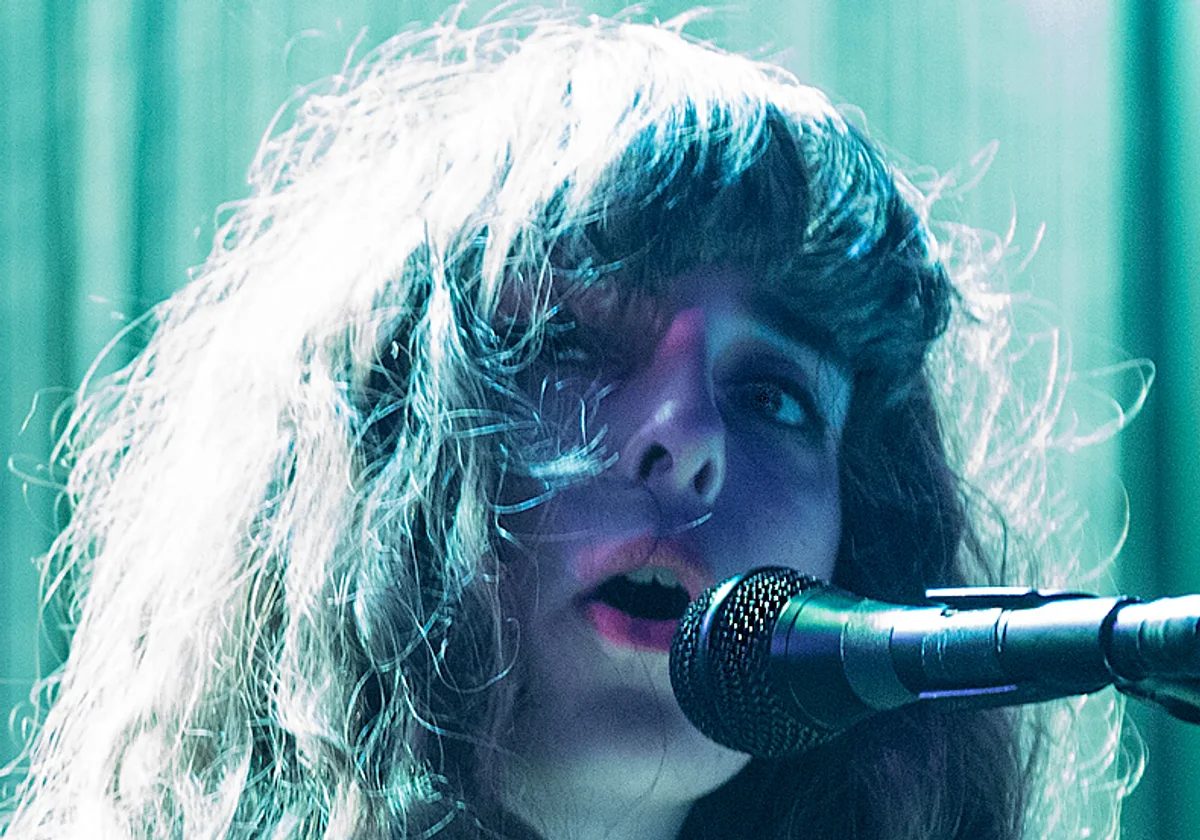
Cover image credit: Victoria Legrand of Beach House, photographed by Kim Erlandsen at Øyafestivalen via Wikimedia Commons, CC BY-SA 2.0, modified.
.jpg)