
Electronica is useful precisely because it leaves room between categories. It can hold intricate beat programming, ambient space, acoustic performance, club rhythm, experimental pop and sound design without requiring every track to serve one dance floor. That freedom also makes label research harder. A technically impressive production still needs a clear musical proposition and a catalogue where its tempo, structure and emotional scale make sense. These ten active labels provide distinct reference points for electronica artists in 2026.
Define the idea before polishing the texture
Start with the part a listener could recognise after the session closes: a rhythmic relationship, harmonic movement, vocal phrase or unusual instrumental gesture. Then make processing support that idea. Compare reference tracks at matched loudness, check the low end in mono and automate changes instead of filling every gap with another layer. When researching labels, study several recent releases rather than one famous record. Note whether the catalogue favours albums or singles, live performance or detailed studio construction, and direct songwriting or abstraction.
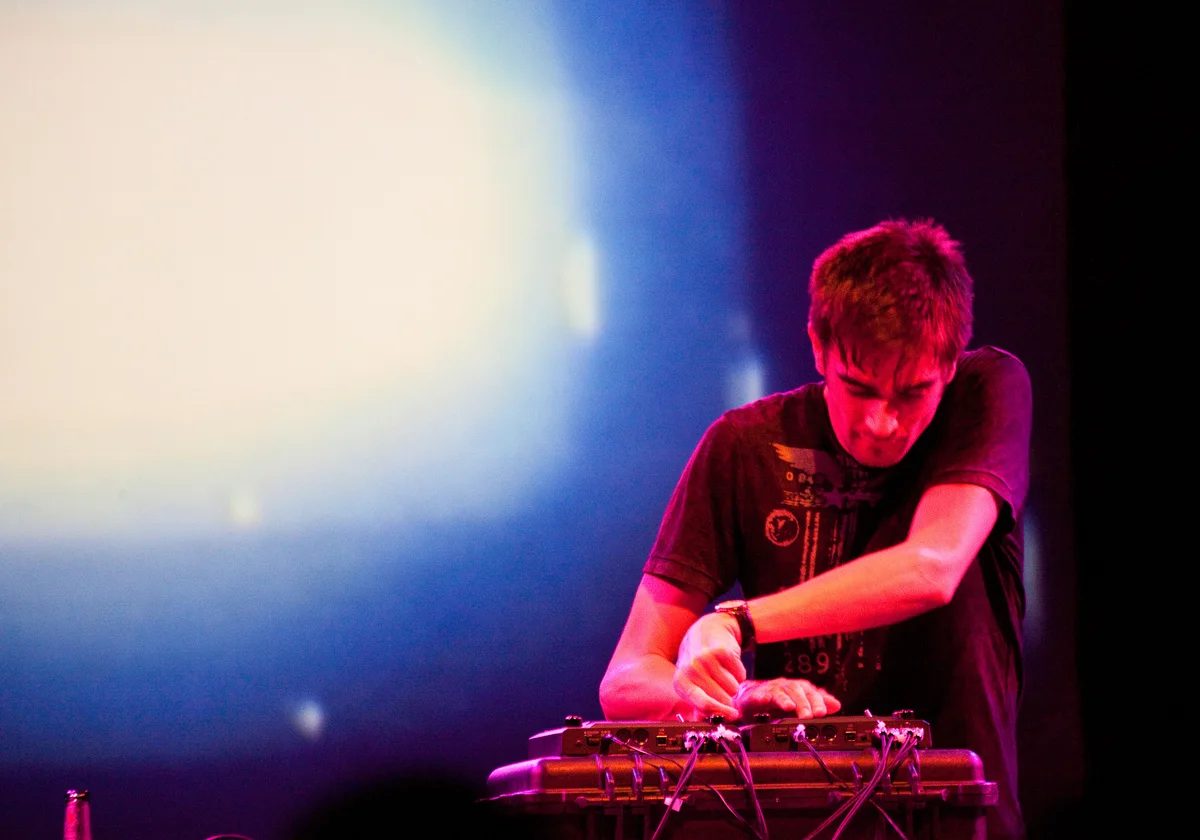
Representative artist: Jon Hopkins
Jon Hopkins represents electronica as a continuum between physical rhythm, immersive sound and patient composition. Immunity turns field-recorded detail and club momentum into a tightly sequenced album; Singularity moves from granular intensity toward acoustic calm; and RITUAL develops as one continuous long-form piece rather than a collection of separate singles. His work remains relevant because the production scale never replaces musical direction: distortion has a dynamic role, recurring patterns evolve through timbre and harmony, and quiet passages reset the listener's sense of space. Producers can study how each record establishes its own rules, then makes every transition reinforce them. The practical lesson is to build a recognisable sonic system around the composition, not a chain of impressive effects.
Cover: Jon Hopkins. Photo by Matt Biddulph, via Wikimedia Commons, CC BY-SA 2.0 (modified).
.jpg)
Top 10 electronica record labels
1. Warp Records — adventurous electronic music with lasting form
Warp Records remains a central reference for electronica through Aphex Twin, Autechre, Boards of Canada, Squarepusher and Oneohtrix Point Never, while its current catalogue continues to connect electronic production with visual art, composition and performance. A suitable project needs a distinct internal logic. Unusual synthesis or rhythm is valuable when it supports memorable structure across a complete release.
2. Ninja Tune — detailed production across scenes
Ninja Tune links left-field electronics, beats, jazz, club music and songwriting through artists including Actress, Bonobo, Floating Points and Maribou State. Its range rewards identity rather than a generic “electronic” tag. Present finished music, clear collaborators and a concise release narrative. Show how the project can develop across recordings and performance instead of relying on one production trick.
3. Ghostly International — sound and visual identity in one frame
Ghostly International joins electronic music with design-conscious presentation. Tycho, Matthew Dear, Shigeto, Kaitlyn Aurelia Smith and Khotin illustrate several routes through melodic electronica, experimental rhythm and ambient detail. Strong material needs an identifiable palette and a coherent visual context, but artwork cannot substitute for composition. Make the melodic or rhythmic centre clear before adding atmosphere.
4. Hyperdub — electronic futures built from local detail
Hyperdub continually reframes electronic music through bass pressure, experimental club forms, footwork, voice and sound design. Current releases from Loraine James, Foodman, Nazar, Ikonika and Burial show that the catalogue values singular perspective over a fixed tempo. A fitting project should transform its influences, control sub-bass precisely and communicate a world beyond familiar genre presets.
5. Planet Mu — restless rhythm and electronic experimentation
Planet Mu is a durable home for exploratory electronic music, from µ-Ziq and Venetian Snares to Ital Tek, Rian Treanor and newer producers. Its 2026 schedule confirms an active appetite for unusual rhythmic systems and strong sound design. Producers should retain musical movement beneath technical complexity. Clean transients, deliberate sequencing and a personal approach to synthesis matter more than maximum density.
6. Brainfeeder — beat science with instrumental personality
Brainfeeder, founded by Flying Lotus, connects electronica with jazz, hip-hop, bass music and adventurous musicianship. Dorian Concept, Teebs, Lapalux, Kuedo and Flying Lotus demonstrate how programmed sound can retain human timing and character. A relevant release needs more than virtuosic editing: harmony, groove and instrumental choices should interact, with every guest or live part shaping the composition.
7. Mute — electronic experimentation with a strong authorial voice
Mute has supported electronic invention across synth-pop, industrial music, experimental composition and club culture. Its catalogue includes foundational artists alongside current work from producers such as HAAi and Terence Fixmer. The common lesson is authorship. Develop a complete point of view across sound, performance and lyrics where applicable, and avoid treating historic hardware or industrial texture as identity by itself.
8. Erased Tapes — electronics in dialogue with performance
Erased Tapes brings electronic production into conversation with piano, strings, voice and contemporary composition. Rival Consoles and Nils Frahm show different ways to turn synthesis and processing into expressive performance. The label is a useful benchmark for projects with dynamic range and a clear instrumental concept. Capture touch, room sound and timing carefully instead of quantising away the human source.
9. !K7 Records — album craft connected to DJ culture
!K7 Records spans artist albums and the long-running DJ-Kicks series, connecting home listening to club context without reducing either one. Electronica fits when the project has sequencing discipline and a clear relationship to rhythm. Present a body of work with contrast between tracks, document samples and collaborators, and explain how the music functions beyond an isolated playlist placement.
10. Smalltown Supersound — open-ended electronics with character
Smalltown Supersound moves between Norwegian electronic music, left-field dance, jazz-informed experimentation and art-pop. Lindstrøm, Prins Thomas, Carmen Villain and Kelly Lee Owens reflect a catalogue where personality survives across different tempos. A suitable release should make its cultural and musical perspective audible. Prioritise distinctive arrangement and tone over fashionable production references.
LISTN Electronica radio coverage
LISTN maps Electronica campaigns to its electronica category. As of September 14, 2026, this category covers 362 distinct radios across 65 countries. The five leading countries are the United Kingdom (45), Spain (35), the United States (34), Germany (25) and France (24).
Complete radio count by country
United Kingdom: 45; Spain: 35; United States: 34; Germany: 25; France: 24; Italy: 24; Australia: 17; Netherlands: 13; Argentina: 10; Portugal: 10; Brazil: 9; Canada: 8; Greece: 8; Chile: 7; Belgium: 6; Hungary: 6; Romania: 6; Mexico: 5; Bolivia: 4; Bulgaria: 4; Austria: 3; Dominican Republic: 3; Ecuador: 3; Russian Federation: 3; Uruguay: 3; Colombia: 2; Croatia: 2; Israel: 2; Japan: 2; New Zealand: 2; Peru: 2; South Africa: 2; Albania: 1; Cyprus: 1; Denmark: 1; Egypt: 1; Estonia: 1; Finland: 1; Ghana: 1; Guatemala: 1; Hong Kong: 1; India: 1; Indonesia: 1; Iraq: 1; Ireland: 1; Kosovo: 1; Latvia: 1; Lithuania: 1; Luxembourg: 1; Malta: 1; Mauritius: 1; Monaco: 1; Montenegro: 1; Nicaragua: 1; Pakistan: 1; Poland: 1; Saint Lucia: 1; Serbia: 1; Sint Maarten (Dutch part): 1; Switzerland: 1; Taiwan, Province of China: 1; Thailand: 1; Tunisia: 1; Turkey: 1; Venezuela: 1.
Build a focused electronica campaign
Prepare lossless masters, clean versions where needed, full credits, sample documentation and precise metadata. Describe the music with two or three useful coordinates—such as melodic electronica, experimental club, ambient electronics or beat-driven composition—then identify the structural feature that makes it distinct. For radio research, start with the country totals above and inspect recent programmes, tracklists and presenter preferences. Prioritise genuine fit over reach, keep every private link current and make artwork consistent with the release. When the music and target shows align, build a focused LISTN campaign.