
Gospel records carry testimony through choir harmony, church-rooted lead vocals, contemporary R&B, worship, Southern quartet singing and hip-hop. The strongest labels understand both the music’s ministry context and the practical work of building audiences across churches, radio, touring, streaming and video. This ranking highlights ten active companies with distinct catalogues and development models. For artists, the useful comparison is not simply scale: it is whether a label already knows how to present the particular tradition, vocal language and community behind the song.
What gospel labels listen for
A gospel submission needs a lead performance with conviction, lyrics that say something specific and arrangements that support rather than crowd the message. Prepare complete songwriter, producer, musician and choir credits, along with clean masters, instrumentals, performance tracks and lyric sheets. A live clip matters because programmers, promoters and labels need to see whether the song connects in a room. Research each catalogue carefully: a choir anthem, praise-and-worship recording, gospel rap single and Southern quartet song belong in different conversations, even when they share the same faith foundation.
Representative artist: Kirk Franklin
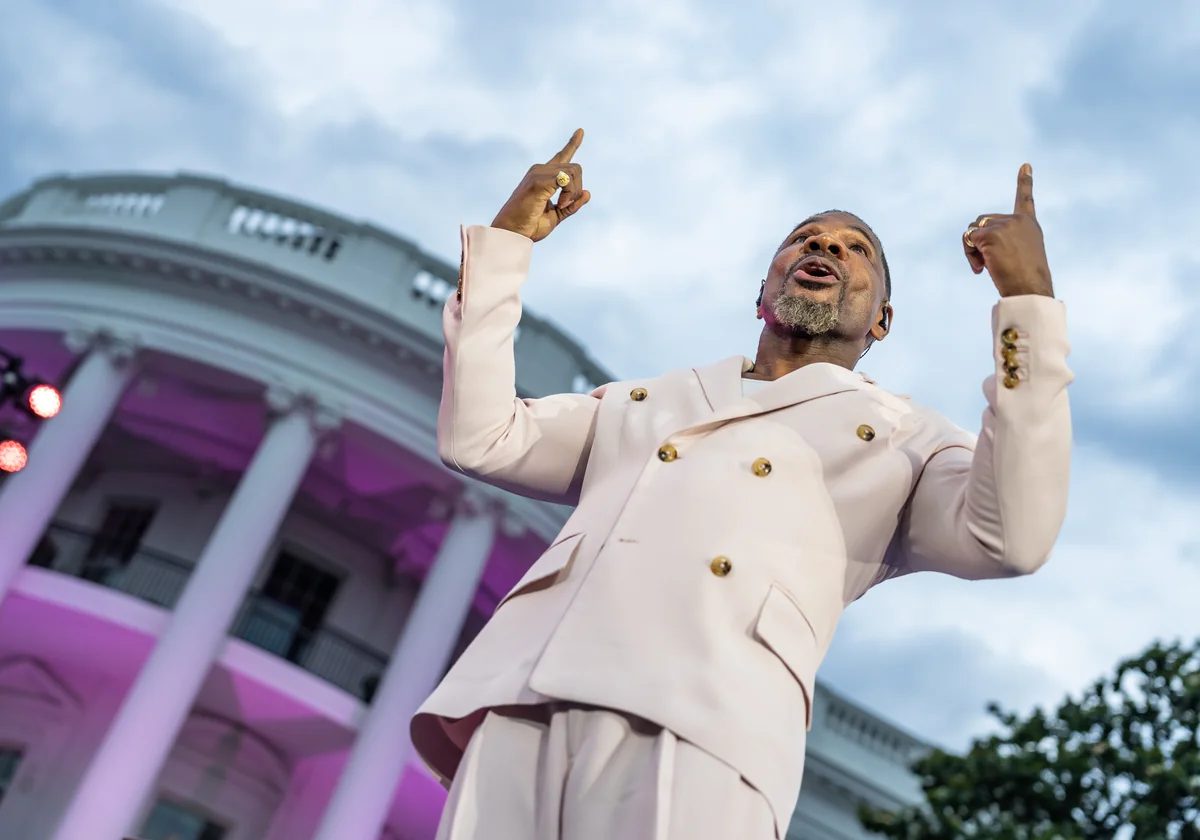
Kirk Franklin changed contemporary gospel by treating the choir director as producer, arranger and front-facing storyteller. His signature joins church call-and-response, massed harmony and handclaps with R&B structure, hip-hop rhythm and tightly staged transitions. The Nu Nation Project made that synthesis impossible to ignore; Hero paired large-scale arrangements with direct songs including “Looking for You”; and Father’s Day brought mature writing about family, faith and repair into his current catalogue. Franklin remains relevant because his records sound designed for communal participation without sacrificing studio detail. He also keeps generations in conversation, placing traditional vocal force beside contemporary drums and spoken interludes. Independent gospel artists can learn from that architecture: make every musical turn serve the testimony, rehearse the live experience as carefully as the master and build a recognisable language that a choir, congregation or listener can immediately inhabit.
Cover: Kirk Franklin. Photo by Adam Schultz / The White House, via Wikimedia Commons, public domain.
.jpg)
Top 10 gospel record labels
1. Motown Gospel — contemporary gospel with cultural reach
Motown Gospel brings the Motown name to a focused gospel operation whose current catalogue spans major voices such as Tasha Cobbs Leonard, Tye Tribbett, Jonathan McReynolds and Brian Courtney Wilson. It ranks first for connecting church credibility, ambitious live recordings and broad digital campaigns without treating gospel as a pop subdivision. A strong fit needs a singular vocal presence, songs that work beyond one service and a visual and touring plan built for sustained development.
2. RCA Inspiration — a home for defining gospel voices
RCA Inspiration combines deep genre history with current artists including Kirk Franklin, Kierra Sheard-Kelly, Travis Greene and Marvin Sapp. Its catalogue shows fluency in choir-driven contemporary gospel, worship, radio ballads and artist-led ministry platforms. RCA ranks second because it can scale highly individual voices while preserving the testimony at the centre of each project. Artists approaching this level need exceptional songs, an established audience and a complete creative world rather than an isolated promising single.
3. Reach Records — gospel rap built as a movement
Reach Records has developed Christian hip-hop through Lecrae, Trip Lee, Tedashii, Andy Mineo, Hulvey and 1K Phew. Its strength is a coherent culture where faith, lyrical craft, touring and visual identity reinforce one another while artists occupy different rap lanes. Reach takes third place for proving that gospel-rooted rap can build durable careers and international communities. Suitable submissions need technical command, a clear point of view and production competitive with the wider hip-hop market.
4. TRIBL Records — collaborative worship for the present tense
TRIBL Records is closely associated with Maverick City Music and a collaborative model that lets writers, worship leaders and vocalists create in the same room. Naomi Raine, Chandler Moore and their wider circle demonstrate how live spontaneity can become a repeatable recording language. TRIBL ranks fourth for turning ensemble chemistry into songs that travel through churches, streaming and touring. The right project needs memorable congregational writing, disciplined musicianship and a genuine collaborative identity.
5. Tyscot Records — independent gospel infrastructure with history
Tyscot Records has operated from Indianapolis since 1976 and remains one of the most important Black-owned gospel labels. Its current activity around Anthony Brown & group therAPy, Kelontae Gavin and other church-connected voices links legacy knowledge to modern release strategy. Tyscot ranks fifth because independence here includes distribution experience, radio relationships and long-term genre understanding. Artists should bring finished vocals, organised rights information and evidence that their music already serves a real community.
6. Malaco Records — catalogue depth and Southern gospel authority
Malaco Records carries an extraordinary gospel lineage through The Mississippi Mass Choir, The Canton Spirituals and recordings connected with many foundational singers and groups. Its Jackson, Mississippi base gives the company a specific relationship to quartet singing, mass choirs and the Southern church tradition. Malaco ranks sixth because its catalogue remains a working reference for phrasing, harmony and ensemble power. A relevant pitch should understand that history and add a distinct voice rather than imitate its surfaces.
7. Fair Trade Services — vocal excellence across gospel and worship
Fair Trade Services supports a roster that includes CeCe Winans alongside worship and Christian music artists. Winans’ continuing album and touring presence shows how classic gospel technique, carefully chosen songs and an intergenerational audience can sustain one another. Fair Trade ranks seventh for pairing focused artist development with radio, retail and church-facing reach. The best fit is a performer with undeniable live vocals, a defined ministry context and songs capable of carrying meaning in both personal listening and communal settings.
8. Blacksmoke Music Worldwide — radio-minded independent development
Blacksmoke Music Worldwide, founded by Kerry Douglas, has built independent gospel campaigns around artists including James Fortune and Zacardi Cortez. The label’s strength is recognising songs and singers that can connect quickly with gospel radio while retaining a church-rooted emotional directness. Blacksmoke ranks eighth for converting close knowledge of the audience into visible artist breakthroughs. Submissions need a decisive lead vocal, a radio-ready structure and a team prepared to support interviews, performances and consistent follow-through.
9. Gaither Music Group — Southern gospel through performance media
Gaither Music Group extends Southern gospel through artists such as the Gaither Vocal Band, The Isaacs and Jason Crabb, supported by an extensive video and live-performance ecosystem. Its catalogue values ensemble blend, narrative songwriting and musicians who can communicate directly to multigenerational audiences. Gaither ranks ninth because recordings, concerts and filmed performances operate as one durable discovery system. A suitable artist needs excellent live delivery, repertoire depth and songs with stories strong enough to travel beyond a single release cycle.
10. StowTown Records — specialist care for Southern gospel artists
StowTown Records closes the list with a focused independent roster that includes Triumphant Quartet, The Erwins and Doug Anderson. Its releases preserve quartet craft and family-harmony traditions while presenting them through current production and coordinated touring. StowTown earns tenth place because its specialism makes the label’s audience knowledge unusually precise. Artists should study the roster’s vocal formats and touring circuits, then pitch a complete programme of songs rather than one track detached from a live identity.
LISTN gospel radio coverage
LISTN maps Gospel campaigns to its gospel category. As of September 15, 2026, this category covers 12 distinct radios across 8 countries. The five leading countries are the United States (4), the United Kingdom (2), Belgium (1), Chile (1) and Costa Rica (1).
Complete radio count by country
United States: 4; United Kingdom: 2; Belgium: 1; Chile: 1; Costa Rica: 1; El Salvador: 1; Haiti: 1; Philippines: 1.
Plan a focused gospel campaign
Start by naming the song’s exact lane: contemporary gospel, choir, worship, quartet or gospel rap. Lead with the recording that communicates its message fastest, then supply clean metadata, lyrics, complete credits, a concise artist story and one convincing live performance. For radio, separate outlets by format and explain the song’s musical fit in one sentence; a programmer should not have to infer whether the priority is lead vocal, choir arrangement, congregational use or rap craft. Use the country map to focus first on places where LISTN coverage overlaps with existing listeners, church partners or touring signals. Keep links current and follow up with useful context rather than repeated asks. When the release package is ready, build a focused LISTN campaign.