
Hard techno is an international ecosystem, not simply techno played faster. Distorted kicks, acid pressure, rave stabs and vocal hooks meet production built for warehouses and festival stages. Labels give that energy a point of view, connecting industrial and schranz roots with trance, hardcore or contemporary hard dance. These ten imprints offer references for artists developing forceful records with more than volume alone.
Build impact before adding speed
A high BPM does not automatically create hard techno. The kick needs a clear pitch and envelope, the bass must leave room for its tail, and every breakdown must release tension. Compare a demo with our broader techno labels guide and industrial techno guide. If rave immediacy, extreme low-end pressure and rapid transitions define it, the labels below provide a more precise target.
Representative artist: Sara Landry
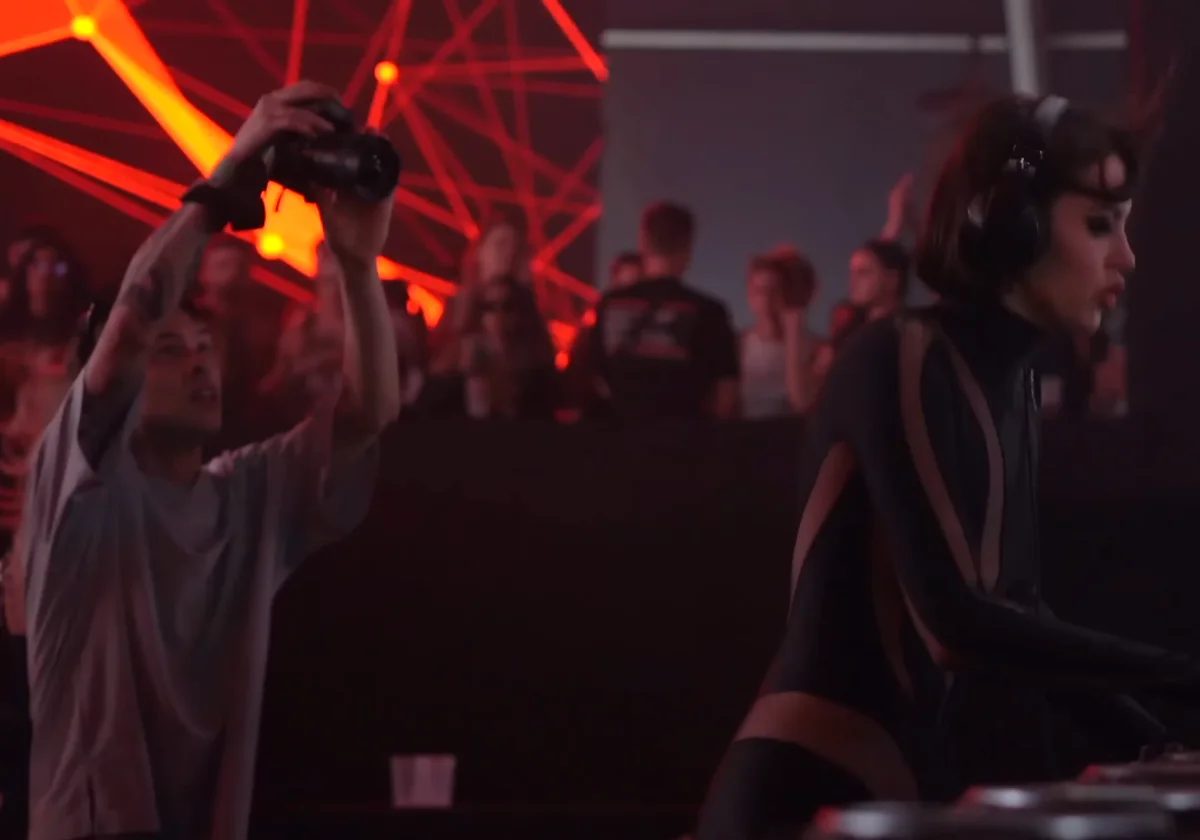
Sara Landry represents hard techno's current scale while keeping a producer-led identity. Her sound combines tightly compressed kicks, abrasive percussion and rave-sized tension with trance melody, vocals and deliberate moments of release. The 2021 Incoming EP established her HEKATE imprint as a home for that approach, while Spiritual Driveby expanded it into a full album with collaborators including Nico Moreno, Shlømo and Mike Dean. Tracks such as “Heaven,” “Pressure” and “Prisoner” show how she places memorable toplines and emotional harmony inside hard, high-BPM structures. Her official behind-the-scenes film also makes the studio process visible rather than treating the project as spectacle alone. Landry remains relevant because her releases, label curation and international performances connect an underground-derived sound with a much larger audience. Producers can study how her arrangements create recognisable peaks without sacrificing kick definition or rhythmic momentum.
Cover: Sara Landry. Photo by DrAttendoloSforza, via Wikimedia Commons, CC BY-SA 4.0 (modified).

Top 10 hard techno labels
1. Teletech — the modern UK hard-techno network
Manchester's Teletech operates as both a label and event platform, linking its catalogue directly to crowded dance floors. Azyr, Alex Farell, Kander, OMAKS, SIKOTI and Zorza move between hard techno, schranz, trance and hardcore-informed rave. Its Bandcamp catalogue and Hyper compilations document that range. Teletech is a clear reference for immediate hooks, bold transitions and contemporary festival pressure.
2. HEKATE Records — ritual atmosphere with peak-time force
Founded by Sara Landry, HEKATE Records frames hard techno through dark atmosphere, physical low end and a strong visual world. Incoming and Spiritual Driveby established the centre, while Alex Farell, LEGZDINA, Charlie Sparks and Nico Moreno broadened its palette. HEKATE suits music where vocals, melodic tension and a dramatic arc survive beside the kick. Reference it when building a track that commands a large room while retaining an emotional signature.
3. Reckless Records — Rotterdam speed with rave structure
DYEN launched Reckless Records in Rotterdam in 2021 as a platform for modern harder techno. The catalogue links his own direct, fast productions with emerging and established artists drawn to raw percussion, rave signals and aggressive forward motion. Various-artists releases give the imprint range while preserving a recognisable high-energy centre. Study Reckless for arrangement economy: the strongest tracks introduce a memorable motif quickly, keep the groove legible at speed and use each breakdown to increase rather than interrupt momentum.
4. Taapion — emotional pressure from the Paris underground
Shlømo, AWB and PVNV founded Taapion in Paris, and its catalogue has followed techno from atmospheric depth into a harder, more emotionally charged present. Shlømo releases such as Mercurial Skin, I'm Not Done Yet and the 2026 singles “DEAD SERIOUS” and “NOT THE SAME” connect dense kick design with vulnerable melody and fractured vocal detail. Taapion suits artists who can create pressure without flattening contrast. Use it to study how silence, distortion and harmonic colour can make high-impact drops feel personal.
5. Molekül — groove-led Paris techno at high velocity
Paris label Molekül has developed a broad but coherent language around fast techno, acid, hard groove and playful rave construction. JKS, Mayeul, AIROD, MRD, Jan Vercauteren, Cult and many newer artists have contributed to a catalogue now substantial enough to show several generations of the sound. Its tenth-anniversary compilation gathers sixteen tracks around that shared DNA. Molekül is a strong reference when swing and personality matter as much as distortion: percussion can feel tough without becoming rigid.
6. NineTimesNine — live acid intensity turned into a label
Italian duo 999999999 created NineTimesNine in 2016, first as an outlet for their own precision-tooled vinyl releases and later as a platform for other artists. Their hardware-led approach joins acid sequences, punishing drums and the instability of live improvisation. The catalogue matters because it translates that immediacy into records that remain functional beyond a performance clip. Producers should notice the controlled repetition: a few machine parts evolve through timing, filtering and saturation rather than constant layering.
7. Verknipt Records — an event-scale hard-techno pipeline
Verknipt Records extends the Dutch event brand's hard-techno programming into a release catalogue. Music from Luciid, DIØN, Mha Iri, Nusha, Akoriz and other artists reflects the directness required by the brand's large productions: thick low end, recognisable lead sounds and transitions that communicate instantly. The label is valuable for producers testing whether a track's central idea reads outside a small club. Keep the master forceful, but leave enough transient definition for the rhythm to remain intelligible.
8. 44 LABEL GROUP — Berlin severity with a fashion-world edge
Kobosil's 44 LABEL GROUP joins hard, industrial techno with a tightly controlled visual identity. Releases by Kobosil and affiliated artists favour hammering drums, abrasive synth pressure and bleak, economical motifs. Its catalogue is less about chasing every contemporary crossover than making a narrow aesthetic unmistakable. Use 44 as a reference for restraint inside aggression: one brutal rhythmic idea, carefully mixed and repeated with conviction, can be more effective than a sequence of unrelated drops.
9. DSR Digital — a deep working catalogue for hard producers
Budapest-based DSR Digital describes its territory directly as industrial, raw and hard. Its extensive catalogue, recurring Hard Drive compilations and releases from a wide international producer base make it a practical map of the genre's working underground. The volume does not remove the need for identity: the useful lesson is how kick shape, vocal treatment, acid movement and breakdown length distinguish tracks within a highly functional format. DSR is especially relevant to developing artists refining consistency across several releases.
10. Kube Records — long-running hard-techno fundamentals
Active since 2010, Kube Records provides a longer view of hard techno than many platforms associated with the current boom. The Lisbon-based label's catalogue includes Alex TB, Buchecha, Hard J, TRB and a continuing flow of compilations and EPs built around raw club function. Kube is a useful reference for producers connecting present-day speed with an earlier hard-techno vocabulary. Focus on durable groove, uncluttered acid lines and mixes that can withstand long sets rather than relying only on novelty.
LISTN Hard Techno radio coverage
LISTN maps Hard Techno campaigns to its techno category. As of September 9, 2026, this category covers 664 distinct radios across 79 countries. The five leading countries are the United Kingdom (95), Germany (57), France (52), the United States (52) and Spain (50).
Complete radio count by country
United Kingdom: 95; Germany: 57; France: 52; United States: 52; Spain: 50; Italy: 43; Netherlands: 25; Argentina: 23; Chile: 18; Australia: 17; Belgium: 16; Colombia: 15; Canada: 14; Greece: 12; Hungary: 12; Portugal: 12; Romania: 10; Brazil: 9; South Africa: 9; Bulgaria: 7; Ecuador: 7; Croatia: 5; Peru: 5; Switzerland: 5; Israel: 4; Mexico: 4; Poland: 4; Russian Federation: 4; Venezuela: 4; Costa Rica: 3; Ghana: 3; Ireland: 3; Uruguay: 3; Austria: 2; Bolivia: 2; Cyprus: 2; Denmark: 2; Dominican Republic: 2; Luxembourg: 2; Malta: 2; Monaco: 2; New Zealand: 2; Nicaragua: 2; Pakistan: 2; Sint Maarten (Dutch part): 2; Slovakia: 2; Sweden: 2; Thailand: 2; Zambia: 2; Albania: 1; Armenia: 1; Aruba: 1; Egypt: 1; Estonia: 1; Finland: 1; Georgia: 1; Honduras: 1; Hong Kong: 1; India: 1; Indonesia: 1; Iraq: 1; Isle Of Man: 1; Japan: 1; Kenya: 1; Kosovo: 1; Latvia: 1; Lithuania: 1; Montenegro: 1; Panama: 1; Paraguay: 1; Philippines: 1; Saint Lucia: 1; Serbia: 1; Taiwan, Province of China: 1; Tunisia: 1; Turkey: 1; Uganda: 1; Ukraine: 1; United Arab Emirates: 1.
Prepare a hard techno campaign that still breathes
Choose references by rhythm and emotional language, not BPM alone. Identify whether schranz percussion, industrial texture, acid, trance melody or hard-dance vocals drives the track, then state that centre in the pitch. Supply a lossless master, credits, clean artwork and an edit that reaches its defining idea quickly. Check kick and bass in mono, compare masters at matched level and preserve useful movement; constant clipping can make a fast record feel smaller.
For radio, lead with the feature that survives modest speakers: a vocal phrase, acid motif, rhythmic hook or concise breakdown. Separate specialist techno programmes from broader electronic shows, then combine the country coverage above with listener locations and prior support. When production, visual identity and pitch communicate the same intensity, explore a focused LISTN campaign.