
Highlife is a living conversation between Ghanaian dance-band tradition, palm-wine guitar, brass-led orchestration, jazz harmony and the electronic production of successive generations. The best labels working with the music understand that history while giving each recording a useful present-day context.
These ten active labels and imprints stand out in 2026 for new artist development, carefully researched reissues or both. Together they show how Highlife can move from Accra and Kumasi stages to record shops, radio desks and international tours without flattening the music into a generic African-pop category.
How the Highlife labels were selected
The ranking rewards sustained catalogue activity, accurate presentation of Ghanaian artists, meaningful investment in sound restoration or new recordings, and a clear route to listeners. A label earns its place through a specific contribution: documenting a scene, keeping foundational albums available, commissioning contemporary work or connecting Highlife musicians with a durable international audience.
Top 10 Highlife record labels
1. Soundway Records
Soundway helped reset the international understanding of Ghanaian popular music through deeply researched collections such as Ghana Soundz and Ghana Special. Those releases placed guitar bands, dance orchestras, Afro-funk experiments and regional hybrids in a coherent historical frame. The label's strength is context: careful notes, strong mastering and intelligent sequencing let unfamiliar names sit beside recognised figures without reducing Highlife to a single decade or tempo.
2. Mr Bongo
Mr Bongo keeps essential Ebo Taylor and Pat Thomas recordings in circulation while presenting them to audiences that also follow Brazilian, jazz, funk and global dance music. Reissues including Taylor's work with Uhuru Yenzu demonstrate how Highlife guitar, horns and politically alert songwriting can reach collectors without becoming museum pieces. Its distribution and editorial reach make the catalogue visible well beyond specialist African-music circles.
3. Analog Africa
Analog Africa's Essiebons Special 1973–1984 is a model for archive-led label work. By tracing producer Dick Essilfie-Bondzie's studio and label network, it connects famous artists, overlooked bands and the technical character of Ghanaian recording in the period. The label's field research and design turn a compilation into a map of relationships, giving artists individual space while revealing how one independent infrastructure powered an entire scene.
4. Strut Records
Strut's partnership with Pat Thomas and the Kwashibu Area Band shows how a heritage artist can make vital new Highlife rather than simply revisit old material. The self-titled 2015 album and 2019's Obiaa! pair Thomas's supple phrasing with a younger, tightly arranged band. That intergenerational method is the label's decisive contribution: contemporary sessions carry history in their playing, not just in packaging or retrospective notes.
5. Philophon
Berlin-based Philophon maintains a close working relationship with Ghanaian musicians including Alogte Oho and Florence Adooni. Its productions place Frafra gospel voices, Highlife guitar figures, horns and analogue studio texture in focused arrangements built for both albums and seven-inch singles. The results respect northern Ghanaian musical identities while demonstrating that Highlife's future can emerge from regional traditions outside the genre's most familiar southern centres.
6. Outhere Records
Outhere Records gave Santrofi an international platform for a full-band form of contemporary Highlife. The Accra ensemble's Alewa joins bright interlocking guitars, horn punctuation, vocal call-and-response and the rhythmic confidence of musicians who know the classic language from the inside. Outhere's value lies in presenting that musicianship as current African band music, supported by touring and storytelling rather than marketed only through nostalgia.
7. Agogo Records
Agogo's work with Gyedu-Blay Ambolley gives space to one of Highlife's most individual voices. 11th Street, Sekondi reconnects Ambolley's spoken phrasing, jazz instincts and “Simigwa” rhythmic idea with a warm contemporary band sound. The label understands crossover without sanding away character: these records can enter jazz, funk and global-groove programming while remaining anchored in Ghanaian cadence, language and guitar movement.
8. Jazz Is Dead
Jazz Is Dead expanded its collaborative series with Ebo Taylor JID022, pairing Taylor with Adrian Younge and Ali Shaheed Muhammad. The project places his unmistakable guitar and compositional economy inside a new analogue session rather than sampling an old master. That distinction matters: the label creates a genuine meeting between Highlife knowledge and a modern jazz-soul production team, introducing Taylor to listeners through fresh work in his own voice.
9. Awesome Tapes From Africa
Awesome Tapes From Africa built its reputation by following locally circulated recordings that conventional export channels missed. Its reissue of Ata Kak's Obaa Sima captures a singular Ghanaian collision of Highlife melody, rap, electronic drums and home-studio invention. The label's artist-first licensing and global distribution proved that an idiosyncratic cassette could find a large new audience without being rewritten to fit a familiar genre narrative.
10. We Are Busy Bodies
We Are Busy Bodies has become a useful home for restored African catalogues, including recordings by Ghana's Vis-A-Vis. Reissues such as Odo Gu Ahorow bring the band's fluid guitar lines, rich vocal exchanges and measured dance-band pacing back into print. Its focused vinyl programme helps complete the Highlife picture by recovering strong albums that sit outside the handful of canonical titles repeatedly licensed by larger archival labels.
Artist focus: Ebo Taylor makes the guitar speak in sentences
Ebo Taylor is central to modern Highlife because his guitar parts behave like concise conversations: clipped phrases answer the vocal, lock with the horns and leave enough space for the rhythm section to breathe. His writing absorbed jazz and funk without losing the circular motion of Ghanaian dance music. Twer Nyame captures his early mastery of spacious ensemble arranging; Love and Death made his songwriting and political edge newly visible to international listeners; and Appia Kwa Bridge showed that his later work could remain exploratory rather than ceremonial. Ebo Taylor JID022, recorded with Adrian Younge and Ali Shaheed Muhammad, extends that line through a younger studio partnership. In 2026, Taylor remains relevant not simply as a source for reissues and samples, but as a working model for artists who want sophisticated harmony, memorable guitar language and direct rhythmic communication to coexist.
LISTN Highlife radio coverage
LISTN maps Highlife campaigns to its dance category. As of September 17, 2026, this category covers 1,513 distinct radio stations in 105 countries. The five largest country pools are the United Kingdom (218), Italy (161), the United States (118), Germany (115) and France (104).
Complete radio count by country
United Kingdom 218; Italy 161; United States 118; Germany 115; France 104; Netherlands 61; Spain 56; Australia 45; Canada 37; Belgium 36; Hungary 35; Romania 33; Portugal 26; Argentina 25; Brazil 24; Greece 22; Chile 18; Colombia 18; Switzerland 16; Poland 15; Ecuador 14; South Africa 14; Croatia 13; Mexico 13; Ireland 11; Uruguay 11; Austria 10; Bulgaria 10; Denmark 9; Russian Federation 9; Venezuela 9; Indonesia 8; Lithuania 8; Sweden 8; Norway 7; The Republic of North Macedonia 7; Ukraine 7; Bolivia 6; Finland 6; New Zealand 6; Nigeria 6; Bosnia and Herzegovina 5; Dominican Republic 5; Malta 5; Serbia 5; Slovakia 5; Turkey 5; Cyprus 4; Estonia 4; India 4; Israel 4; Luxembourg 4; Costa Rica 3; Ghana 3; Honduras 3; Kenya 3; Kosovo 3; Peru 3; Reunion 3; Slovenia 3; Tunisia 3; Afghanistan 2; Albania 2; Algeria 2; Aruba 2; Curaçao 2; Czech Republic 2; Japan 2; Latvia 2; Montenegro 2; Namibia 2; Nicaragua 2; Paraguay 2; Philippines 2; Puerto Rico 2; Sint Maarten (Dutch part) 2; Uganda 2; Zambia 2; Belize 1; Bonaire, Sint Eustatius and Saba 1; Cayman Islands 1; Cote D'Ivoire 1; Egypt 1; Fiji 1; Gibraltar 1; Guatemala 1; Guyana 1; Haiti 1; Hong Kong 1; Iraq 1; Isle Of Man 1; Kazakhstan 1; Kyrgyzstan 1; Moldova, Republic of 1; Oman 1; Pakistan 1; Qatar 1; Saint Lucia 1; Seychelles 1; Singapore 1; Suriname 1; Syrian Arab Republic 1; Taiwan, Province of China 1; Thailand 1; United Arab Emirates 1.
Plan a focused Highlife campaign
Describe the record's actual Highlife language. Note whether the arrangement is palm-wine acoustic, brass-led dance-band, guitar-forward electric Highlife or a contemporary pop production built around Highlife rhythm. Supply complete musician and songwriter credits, translated lyric context where useful, a clean radio edit, and one strong live-performance clip that shows the ensemble relationship.
Begin with the United Kingdom, Italy, the United States, Germany and France as the largest LISTN pools for the dance category, then add Ghana, Nigeria and diaspora markets supported by the artist's listener or touring data. Give programmers a concise cultural and sonic reference instead of a broad “African music” tag. When the metadata, story and assets agree, build a focused LISTN campaign.
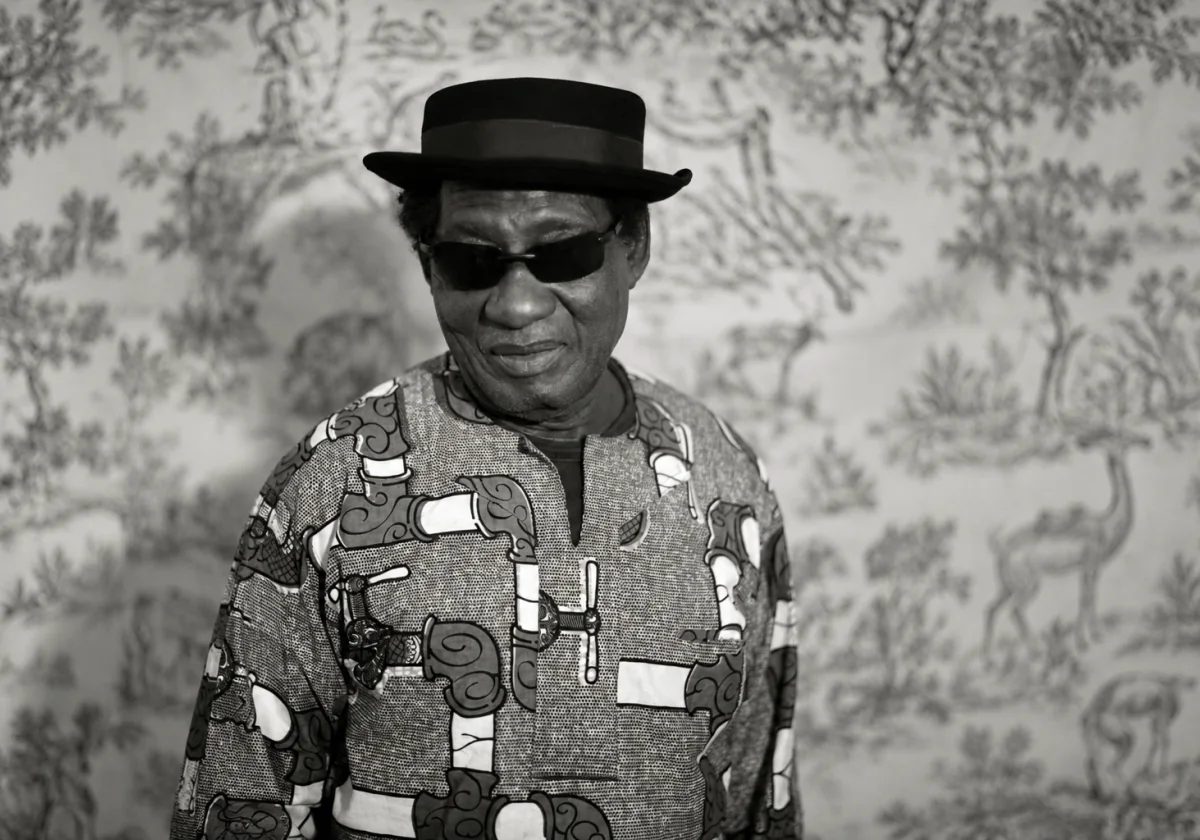
Cover image credit: Ebo Taylor, photographed by Sylvain Lasco at Festival 7ème Vague in 2013 via Wikimedia Commons, CC BY-SA 4.0, modified.
