
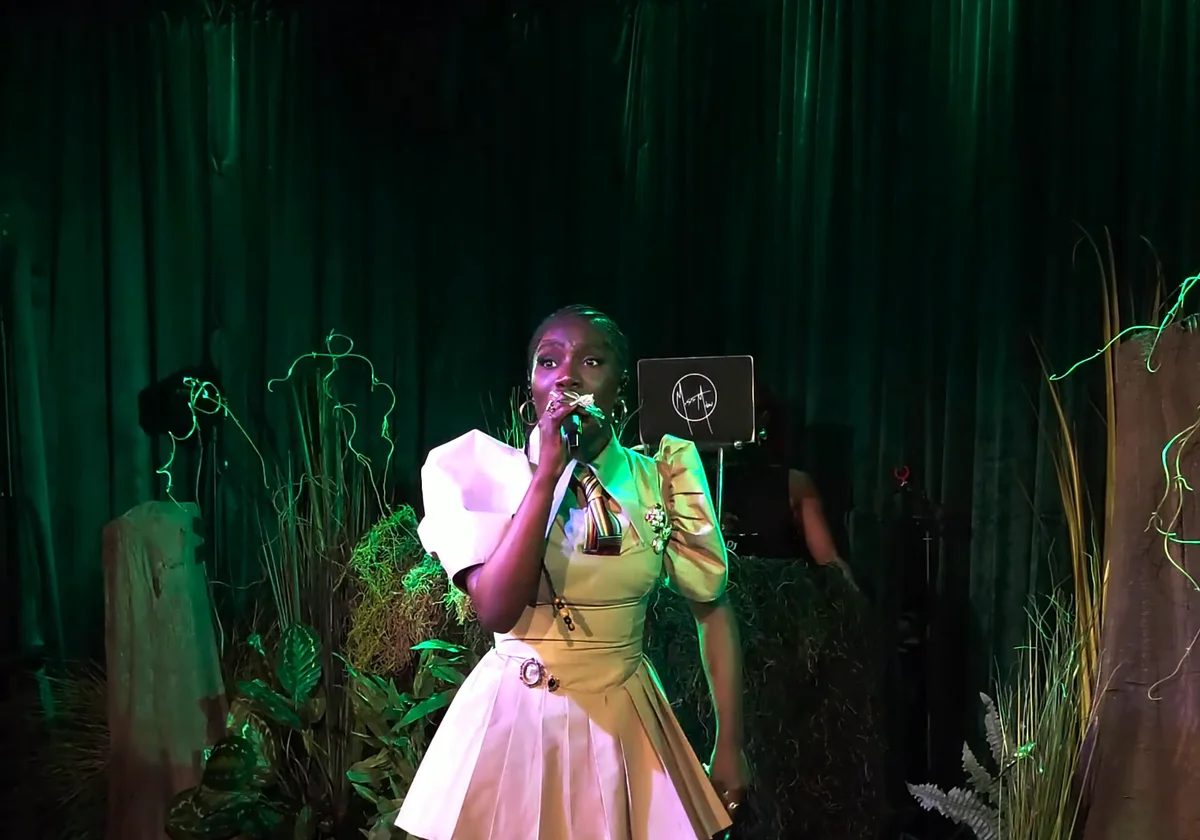
Hip-hop labels do more than release rap records. The strongest ones build recognisable worlds around production, writing, visuals, live performance and community. Some develop artists over several albums; others combine label services with distribution or preserve a tightly defined independent scene. These ten companies offer distinct models for artists deciding where their music belongs in 2026.
Know your lane before approaching a label
A convincing submission starts with a precise artistic proposition. Identify the regional tradition, production language and audience your record speaks to, then show how your voice adds something specific. Prepare a finished master, clean version, instrumental, complete credits, split information, artwork and two or three strong performance clips. Study each label's current catalogue rather than pitching every company on a generic promise of versatility.
Representative artist: Doechii
Doechii represents hip-hop's present range because she treats rap technique, character and arrangement as one continuous performance. Her delivery can turn from clipped, percussive bars to elastic melody without losing narrative control. The 2024 mixtape Alligator Bites Never Heal made that range coherent: “Nissan Altima” foregrounded breathless technical command, while “Denial Is a River” used dialogue and scene changes to turn self-examination into theatre. The 2025 single “Anxiety” extended her reach without simplifying the tension in her writing. Her Best Rap Album win at the 2025 Grammys also marked a rare breakthrough for a woman winning that category with a mixtape. In 2026, Doechii remains relevant because the work joins exacting rap craft to memorable visual direction and a stage presence that can carry both intimate storytelling and large-format performance.
Cover: Doechii performing at the Grammy Museum. Image by the CwE, via Wikimedia Commons, CC BY 3.0, modified.
.png)
Top 10 hip-hop record labels
1. Top Dawg Entertainment — patient development and distinct voices
Top Dawg Entertainment built its reputation by giving singular writers enough time to become complete album artists. Kendrick Lamar's foundational run, ScHoolboy Q's muscular Los Angeles records, Isaiah Rashad's inward Southern writing, Ab-Soul's density and Doechii's theatrical agility form a catalogue with range but clear standards. TDE ranks first because its best releases make individual perspective, sequencing and long-term development more important than chasing a single repeatable sound.
2. Dreamville Records — a collaborative rap ecosystem
Dreamville Records turns J. Cole's artist-led imprint into a connected roster rather than a collection of isolated signings. JID's technical precision, EarthGang's Atlanta experimentation, Bas's melodic control and Cozz's grounded writing meet on projects such as Revenge of the Dreamers III. Dreamville is a useful model for artists who can stand alone while contributing verses, ideas and live energy to a wider creative camp.
3. Quality Control Music — Atlanta trap at commercial scale
Quality Control Music helped define the modern Atlanta rap economy through Migos, Lil Baby, City Girls and successive waves of emerging voices. Its catalogue values instantly identifiable cadence, producer chemistry and records that move quickly from local momentum to mainstream formats. QC remains a key reference for artists whose strongest asset is a distinctive vocal pocket supported by disciplined release volume, visual consistency and club-ready production.
4. Mass Appeal Records — hip-hop history in active conversation
Mass Appeal combines a label operation with media, film and cultural projects built explicitly around hip-hop. Nas's late-career album run with Hit-Boy, releases connected to DJ Premier and the company's archival work show how legacy can generate new records instead of becoming museum material. It suits artists and producers whose music gains force from documented lineage, strong storytelling and collaborations across generations.
5. EMPIRE — independent infrastructure with global reach
EMPIRE operates as an independent label, distributor and publisher across hip-hop, R&B, Afrobeats and other global scenes. Its work with Young Dolph, Larry June and numerous regional artists demonstrates a model built around ownership options, frequent releases and direct digital execution. EMPIRE matters for self-directed teams that already understand their audience and need adaptable infrastructure without erasing the local identity that created demand.
6. Rhymesayers Entertainment — durable artist-run independence
Rhymesayers Entertainment has sustained an independent rap audience through Atmosphere, Aesop Rock, Brother Ali and a deep catalogue of lyric-focused releases. Its active store and touring culture treat physical editions, direct fan relationships and long album careers as core business rather than nostalgia. Rhymesayers is the benchmark for writers with a defined worldview who can build trust through consistent records and compelling live shows.
7. Mello Music Group — producer-led albums and close listening
Mello Music Group describes its field directly as hip-hop, jazz, funk, R&B and soul, and its catalogue makes those connections audible. Apollo Brown, L'Orange, Quelle Chris and Open Mike Eagle have delivered projects where beat architecture and writing receive equal attention. MMG is especially relevant to rappers and producers proposing a complete album concept, unusual sample language or a carefully matched MC-producer partnership.
8. Stones Throw Records — beat culture without fixed borders
Stones Throw Records changed independent hip-hop through Madlib, J Dilla, Lootpack and Madvillain, then kept expanding into soul, jazz, electronic music and left-field pop. Its 2026 catalogue still foregrounds Madlib's Beat Konducta work and the enduring impact of Donuts. Stones Throw belongs on this list because it rewards producers whose sonic identity can lead a project and connect rap to a broader record-collecting culture.
9. 10K Projects — digital-native artist building
10K Projects presents itself as a community where commercial success does not require sacrificing artistic integrity. Its hip-hop successes have included Trippie Redd and other artists who developed highly recognisable voices through internet-native release patterns. The label is relevant to artists with strong direct audience signals, a fast visual language and enough songwriting depth to turn an online breakout into a sustainable catalogue.
10. Loma Vista Recordings — ambitious rap inside a wider roster
Loma Vista Recordings gives hip-hop artists room inside an eclectic independent label. Denzel Curry's Melt My Eyez See Your Future and King of the Mischievous South Vol. 2 connect technical rapping, Southern lineage, live-band arrangements and international touring. Loma Vista is a credible target profile for artists whose rap project can hold its identity beside rock, electronic and alternative releases without being repackaged as a crossover exercise.
LISTN hip-hop radio coverage
LISTN maps hip-hop campaigns to its Hip-Hop category. As of September 15, 2026, this category covers 298 distinct radios across 63 countries. The five leading countries are the United States (73), the United Kingdom (34), Italy (27), Germany (16) and France (15).
Complete radio count by country
United States: 73; United Kingdom: 34; Italy: 27; Germany: 16; France: 15; Australia: 14; Canada: 10; Hungary: 6; Portugal: 6; Spain: 6; Netherlands: 5; Nigeria: 4; Romania: 4; Argentina: 3; Belgium: 3; Chile: 3; Colombia: 3; Dominican Republic: 3; Poland: 3; South Africa: 3; Venezuela: 3; Zambia: 3; Austria: 2; Curaçao: 2; Ecuador: 2; Estonia: 2; Indonesia: 2; Ireland: 2; New Zealand: 2; Peru: 2; Sweden: 2; Uruguay: 2; Algeria: 1; Aruba: 1; Bolivia: 1; Bosnia and Herzegovina: 1; Costa Rica: 1; Croatia: 1; Fiji: 1; Finland: 1; Greece: 1; Guam: 1; Hong Kong: 1; India: 1; Iraq: 1; Kenya: 1; Kosovo: 1; Lithuania: 1; Mexico: 1; Moldova, Republic of: 1; Namibia: 1; Nicaragua: 1; Oman: 1; Pakistan: 1; Philippines: 1; Qatar: 1; Reunion: 1; Seychelles: 1; Sint Maarten (Dutch part): 1; The Republic Of North Macedonia: 1; Tunisia: 1; Uganda: 1; Virgin Islands, British: 1.
Plan a focused hip-hop campaign
Lead with one record whose writing, beat choice and performance all point in the same direction. Supply a clean edit and instrumental alongside the master, then identify stations already programming the closest regional and stylistic references. Make each pitch specific: describe the production, the story and the audience response in concrete terms, and prioritise countries where the available radio map supports the fit. When the record is ready, build a focused LISTN campaign.