
IDM rewards electronic producers who make rhythm, timbre and structure behave like one system. The field grew around music that could be as exacting on headphones as it was disruptive in a club, and its strongest labels still resist a single tempo or production method. That breadth makes fit more important than surface complexity. A busy drum edit or unfamiliar synth patch is not an identity by itself. These ten active labels offer useful reference points for artists building detailed electronic music in 2026.
Make complexity readable
Begin with a musical relationship the listener can follow: a motif changing against the grid, a bass phrase pulling against the drums or a texture that carries harmonic movement. Build variations from that relationship before adding detail. Test the arrangement at low volume, compare sections without mastering loudness and make every abrupt edit earn its place. When studying labels, listen across several recent releases. Note their balance of melody and abstraction, hardware spontaneity and precise sequencing, dance-floor impact and long-form listening.
Representative artist: Aphex Twin
Aphex Twin, the principal alias of Richard D. James, remains a defining IDM reference because his catalogue treats technique as composition. Selected Ambient Works 85–92 established melodic economy and tactile drum programming; Richard D. James Album fused rapid edits with unusually direct harmony; and the Blackbox Life Recorder 21f / in a room7 F760 EP showed that his rhythmic language still moves without repeating its earlier formulas. Warp's 2024 expanded edition of Selected Ambient Works Volume II and the 2025 Music From The Merch Desk (2016–2023) collection have kept that body of work active for a new production generation. The practical lesson is not to imitate his sound palette. It is to let tuning, swing, synthesis and arrangement form a recognisable set of rules for each release.
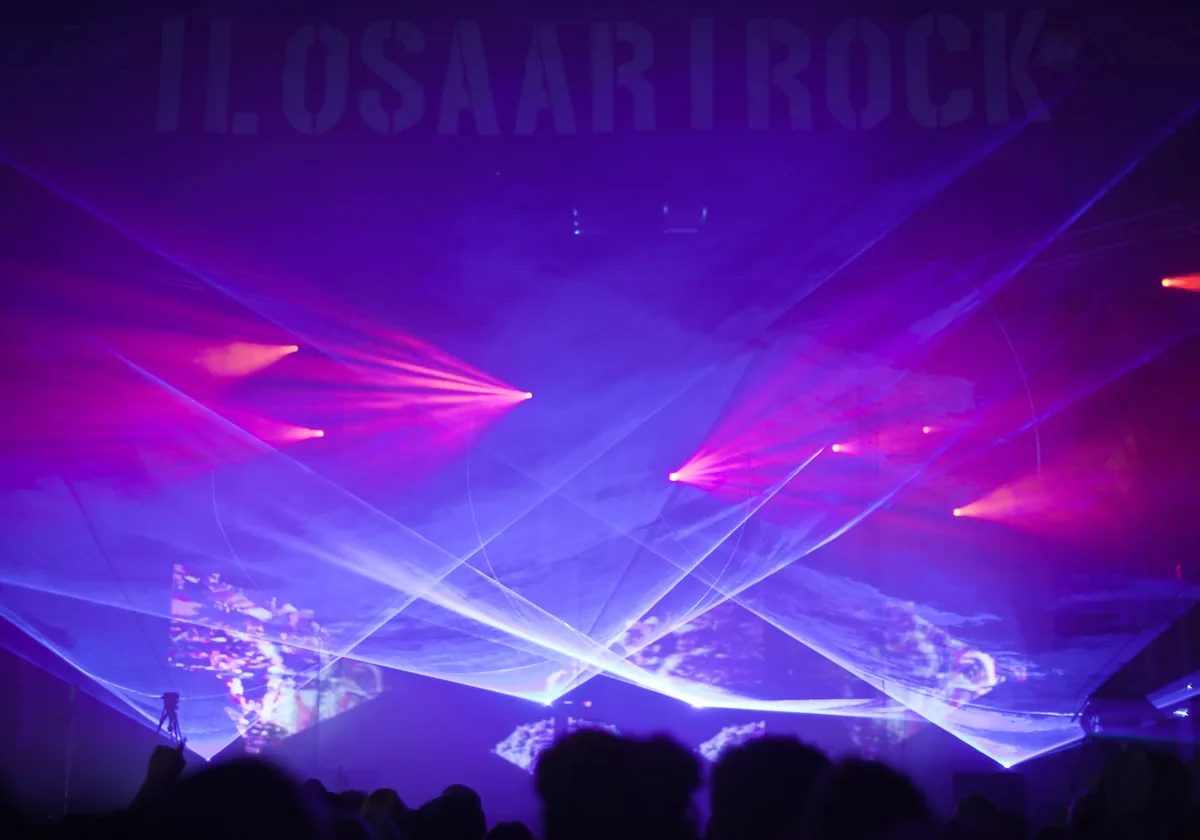
Cover: Aphex Twin at Ilosaarirock 2011. Photo by Ville Hyvönen, via Wikimedia Commons, CC BY-SA 2.0 (modified).

Top 10 IDM record labels
1. Warp Records — the foundational catalogue that keeps moving
Warp Records established the listening-oriented electronic frame around its Artificial Intelligence series, then expanded it through Aphex Twin, Autechre, Boards of Canada and Squarepusher. Its catalogue remains active rather than archival: recent Aphex Twin editions sit beside new work across electronic composition, club music and experimental pop. A suitable project needs a durable concept, exact sound choices and an identity strong enough to extend beyond one technically impressive track.
2. Planet Mu — restless rhythm across three decades
Planet Mu marked its thirtieth year with a 2025 compilation connecting µ-Ziq, Venetian Snares, Jlin, RP Boo, Rian Treanor and a newer generation. That history spans IDM, breakcore, footwork, jungle and bass music without flattening their local rhythmic character. Producers should study how the label favours movement and surprise while preserving a track's centre. Submit finished work with controlled low end and a clear reason for every rhythmic mutation.
3. Skam Records — oblique electronics with a strong object identity
Skam Records helped define the Manchester branch of experimental electronics through Boards of Canada, Gescom and Bola, and its continuing catalogue keeps that lineage deliberately hard to categorise. Skam is a reference for compact releases where sequencing, artwork and physical format reinforce the music's mystery. A fitting demo should feel complete before explanation: distinctive tone, economical track order and details that reward repeated listening without hiding weak composition behind obscurity.
4. Central Processing Unit — electro precision with human tension
Central Processing Unit brings Sheffield's machine-music history into a current catalogue of electro, acid, braindance and IDM. Its 2026 schedule demonstrates unusual consistency without forcing every artist into the same drum palette. CPU is a strong target for tracks where sequencers feel animated: syncopated bass, sharply voiced percussion and melodic information carried by timbre. Keep transients clean, document hardware or software only when relevant, and let the arrangement prove the method.
5. Analogical Force — melodic braindance built for motion
Analogical Force specialises in the point where intricate programming, acid contours and emotionally direct melody meet. Its 2025 releases from artists including Roel Funcken and James Shinra show a catalogue that can accommodate dense digital construction and classic machine funk. Producers should present contrast rather than constant maximalism. Give the lead idea space, vary drum density across sections and make the melodic resolution as deliberate as the sound design.
6. Ilian Tape — hybrid rhythm beyond a fixed club grid
Ilian Tape moves through techno, breakbeat, ambient, jungle and IDM while retaining a tactile, bass-conscious character. Releases such as re:ni and BiggaBush's 2026 Bass Is The Space underline how live feel and studio detail can coexist. The label is a useful benchmark for music that changes rhythmic perspective without losing physical weight. Check sub movement on several systems and preserve the small timing decisions that make programmed drums breathe.
7. Touched Music — collaborative electronics with purpose
Touched Music has built a large charity-driven catalogue around IDM, ambient, electro and related experimental forms. Its compilations place established and emerging artists in direct conversation, making curation and track individuality equally important. A contribution has limited time to establish its voice, so open with a meaningful musical decision rather than a long generic introduction. Deliver accurate credits and masters, and understand the specific project before sending material.
8. Lapsus Records — archival care and forward-facing sound
Lapsus Records connects contemporary left-field electronics with carefully presented reissues and remasters, including its work around game music and experimental club culture. That combination makes context part of the listening experience without reducing releases to nostalgia. Artists should define what their production adds to its references. Use period hardware, tracker techniques or early-digital textures as compositional tools, then shape them into a release that sounds intentional now.
9. Detroit Underground — experimental electronics as a wider system
Detroit Underground operates as both a record label and multidisciplinary platform, linking IDM, electro, techno, audiovisual work and technological experimentation. Its catalogue rewards projects where formal ideas have sonic consequences rather than serving as decoration. A suitable release may involve custom systems or unusual media, but the audio must still communicate independently. Explain the concept concisely and supply a version that reveals pacing, dynamics and musical development without installation context.
10. Point Source Electronic Arts — a community route into new IDM
Point Source Electronic Arts combines a label, media-arts practice and creative community. Its Genome and Artist Showcase compilations make discovery central to the catalogue, with beat-led experimental electronics ranging from melodic to abrasive. It is a useful target for developing producers whose work is specific but not yet attached to a large scene. Choose the track that states your rhythmic and tonal identity fastest, then support it with consistent metadata and finished artwork.
LISTN IDM radio coverage
LISTN maps IDM campaigns to its electronica category. As of September 14, 2026, this category covers 362 distinct radios across 65 countries. The five leading countries are the United Kingdom (45), Spain (35), the United States (34), Germany (25) and France (24).
Complete radio count by country
United Kingdom: 45; Spain: 35; United States: 34; Germany: 25; France: 24; Italy: 24; Australia: 17; Netherlands: 13; Argentina: 10; Portugal: 10; Brazil: 9; Canada: 8; Greece: 8; Chile: 7; Belgium: 6; Hungary: 6; Romania: 6; Mexico: 5; Bolivia: 4; Bulgaria: 4; Austria: 3; Dominican Republic: 3; Ecuador: 3; Russian Federation: 3; Uruguay: 3; Colombia: 2; Croatia: 2; Israel: 2; Japan: 2; New Zealand: 2; Peru: 2; South Africa: 2; Albania: 1; Cyprus: 1; Denmark: 1; Egypt: 1; Estonia: 1; Finland: 1; Ghana: 1; Guatemala: 1; Hong Kong: 1; India: 1; Indonesia: 1; Iraq: 1; Ireland: 1; Kosovo: 1; Latvia: 1; Lithuania: 1; Luxembourg: 1; Malta: 1; Mauritius: 1; Monaco: 1; Montenegro: 1; Nicaragua: 1; Pakistan: 1; Poland: 1; Saint Lucia: 1; Serbia: 1; Sint Maarten (Dutch part): 1; Switzerland: 1; Taiwan, Province of China: 1; Thailand: 1; Tunisia: 1; Turkey: 1; Venezuela: 1.
Build a focused IDM campaign
Export lossless masters, clean versions where relevant, full credits, sample documentation and exact metadata. Describe the music with two or three useful coordinates—braindance, experimental electro, ambient IDM or break-led electronics—then name the structural decision that distinguishes it. For radio research, use the country totals above and inspect recent programmes and tracklists for complex electronic music. Match each track's intensity, length and rhythmic profile to the programme, keep private links current and make the visual identity consistent with the release. When the music and target shows align, build a focused LISTN campaign.