
R&B labels shape more than vocal releases. Their strongest teams connect songwriters, producers, musicians and visual direction while understanding how intimate records can move between specialist radio, streaming playlists and live audiences. This selection covers major-label R&B departments, focused imprints and independent curators with active catalogues. Each has a distinct reason to matter, from long-term artist development to a precise production language.
What R&B labels listen for
A technically polished vocal is only the starting point. Competitive R&B submissions need a memorable topline, emotionally specific writing, controlled dynamics and production that leaves space for the singer. Send the clean master, instrumental, performance version and complete songwriter and producer splits together. A concise artist story, strong live footage and a coherent visual world also help a label understand whether one song can support a durable project. Choose the label whose current roster and release pace match the record rather than sending the same pitch everywhere.
Representative artist: SZA
SZA sits at the centre of modern R&B because her writing makes conversational detail feel structurally musical. Her phrasing can hover behind the beat, rush into a confession or stack into harmonies without losing the emotional thread. Ctrl established that diaristic language through songs such as “Love Galore” and “The Weekend”; SOS widened the frame with rock, rap and pop textures while keeping R&B intimacy at its core; and the expanded Lana chapter extended the album's world with another set of sharply observed songs. Her official RCA profile continues to connect those projects with current releases. For developing artists, the practical lesson is not to imitate her vocal tone. It is to make every production decision serve a recognisable point of view, then build enough range around that voice for an album rather than a single mood.
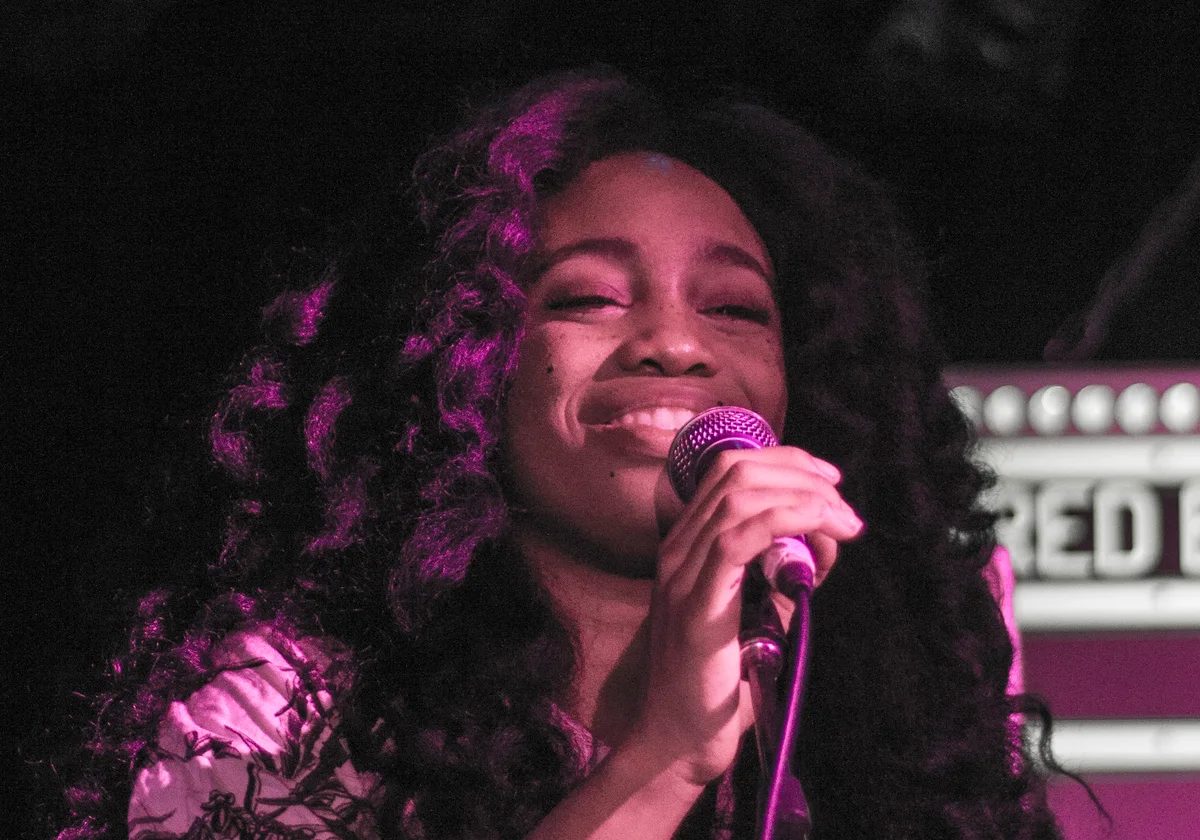
Cover: SZA. Photo by Tiffany Komon for The Come Up Show, via Wikimedia Commons, CC BY 2.0, modified.

Top 10 R&B record labels
1. RCA Records — album-scale modern R&B
RCA Records has one of the clearest current R&B benches at a major label, with SZA, H.E.R. and Victoria Monét representing different balances of songwriting, musicianship and pop reach. RCA ranks first because those artists are developed as complete album acts rather than isolated playlist singles. The catalogue rewards distinctive voices, carefully chosen collaborators and projects that can cross formats without abandoning their core identity. Artists approaching this level need finished songs, a persuasive visual language and evidence that their audience is responding to more than one release.
2. Atlantic Records — vocal tradition with contemporary range
Atlantic Records carries a deep soul and R&B history into a roster that includes Kehlani, Ravyn Lenae and Bruno Mars. The label's value lies in its range: quiet alternative arrangements, direct contemporary songwriting and large live productions can all sit within the same organisation. Atlantic takes second place for pairing that breadth with long-standing expertise in vocal records. A strong fit has an unmistakable singer, songs that translate beyond one production trend and a live proposition capable of deepening the relationship with listeners.
3. Motown Records — heritage activated by new voices
Motown Records remains an essential R&B reference because its name still carries a standard for songs, singers and ensemble craft. Its present-day programme is not simply archival: Leon Thomas has brought detailed musicianship, warm analogue colour and contemporary writing back into the label's foreground. Motown ranks third for turning a foundational identity into a useful modern platform. Artists should arrive with melodies that survive stripped-back performance, disciplined arrangements and a clear understanding of how their work extends soul tradition without treating it as costume.
4. Def Jam Recordings — R&B with rhythmic directness
Def Jam Recordings is inseparable from hip-hop, but its R&B lane has repeatedly succeeded where strong vocal personalities meet direct, beat-led records. Coco Jones, Muni Long and Jeremih illustrate different sides of that approach: commanding performance, songwriter precision and melodic club fluency. Def Jam ranks fourth because it can position R&B inside a wider urban music conversation without flattening the singer's identity. Suitable pitches need an immediate hook, confident vocal character and production that can hold its own beside rap records while preserving emotional detail.
5. Top Dawg Entertainment — patient, world-building development
Top Dawg Entertainment built a reputation for patient development across rap and R&B, with SZA and SiR demonstrating how individual worlds can grow over multiple projects. TDE's strongest R&B releases feel authored from artwork to sequencing: atmosphere is supported by precise writing and producers chosen for continuity. The label ranks fifth because it gives unconventional voices room to become legible at scale. Artists looking toward this model need a body of work, not a loose folder of demos, and should be able to explain the emotional and sonic thread connecting each song.
6. LVRN — collaborative Atlanta infrastructure
LVRN, short for Love Renaissance, treats management, label work and creative development as connected disciplines. Summer Walker and 6LACK helped define its R&B identity through intimate writing, spacious production and carefully sustained visual campaigns. LVRN ranks sixth for building an Atlanta-based ecosystem in which artists, producers and directors can develop a shared language without sounding interchangeable. A relevant submission should already reveal a strong emotional perspective, repeatable visual instincts and the beginnings of a community around the music.
7. OVO Sound — nocturnal R&B as a coherent catalogue
OVO Sound has maintained a recognisable R&B lane through PARTYNEXTDOOR, Majid Jordan, dvsn and Naomi Sharon. Minimal drums, negative space, close-miked vocals and late-night tension recur across the catalogue, yet each act carries a different melodic identity. OVO ranks seventh because its releases show the value of strong label-level atmosphere. Artists should not copy that palette; the useful standard is coherence. A pitch needs a complete sonic environment and songs strong enough to remain memorable when the arrangement is deliberately restrained.
8. Epic Records — contemporary voices with crossover scale
Epic Records offers R&B artists access to pop-scale release machinery while supporting vocal records that favour patience and tone. GIVĒON's baritone-led songwriting is a strong example of how a distinctive instrument can become the centre of a global campaign without being overproduced. Epic ranks eighth for that ability to scale specificity. Artists targeting a major system should present undeniable vocal identity, songs with clean structural arcs and audience signals that indicate where a broader campaign can begin.
9. Soulection — producer culture and future-facing R&B
Soulection connects label releases, radio, events and producer culture around future beats, soul and R&B. Its influence comes from the relationship between selectors and makers: rhythm, sound design and edits circulate through a community before settling into fixed genre boundaries. Soulection ranks ninth because it remains a useful home for R&B that is driven as much by production language as traditional song form. Producers and vocalists should bring adventurous drums, detailed low end and collaborations that feel native to the wider scene.
10. Stones Throw Records — independent musicianship at the edges
Stones Throw Records approaches R&B from an independent, musician-led angle. NxWorries links Anderson .Paak's elastic vocals with Knxwledge's chopped soul production, while Sudan Archives expands the conversation through violin, electronics and experimental songwriting. Stones Throw closes the list because its catalogue rewards singular records that sit between soul, hip-hop, funk and left-field pop. The strongest fit is an artist with a self-contained aesthetic, unusual musicianship and a project that benefits from patient curation rather than formulaic genre positioning.
LISTN R&B radio coverage
LISTN maps R&B campaigns to its r&b category. As of September 15, 2026, this category covers 60 distinct radios across 25 countries. The five leading countries are the United Kingdom (9), the United States (9), France (6), Italy (4) and Venezuela (3).
Complete radio count by country
United Kingdom: 9; United States: 9; France: 6; Italy: 4; Venezuela: 3; Argentina: 2; Bulgaria: 2; Canada: 2; Colombia: 2; Ecuador: 2; Germany: 2; Namibia: 2; Nigeria: 2; South Africa: 2; Bermuda: 1; Chile: 1; Finland: 1; Greece: 1; Indonesia: 1; Netherlands: 1; Peru: 1; Philippines: 1; Poland: 1; Spain: 1; Thailand: 1.
Plan a focused R&B campaign
Lead with the song that makes the vocalist's identity clear within the first verse, then separate specialist R&B programmes from soul, pop, hip-hop and electronic outlets according to the actual record. Supply clean and instrumental versions, complete credits, accurate metadata and a short live clip that proves the performance. Use the country map to prioritise territories where existing listener data and radio coverage overlap, and give programmers one concrete story about the song rather than a long biography. When the release package is complete, build a focused LISTN campaign.