
Trip-hop was never one strict production format. Its most durable records connect slow breakbeats with dub space, hip-hop sampling, soul, film-score tension and intimate vocals. In 2026, that language survives across downtempo, left-field electronic music, instrumental beats and alternative pop. Few active labels use “trip-hop” as their only category, so useful targeting depends on catalogue fit. The labels below remain strong reference points for artists working in that wider field.
Build atmosphere around a strong rhythmic centre
Texture cannot rescue an unfocused beat. Start with kick, snare, bass and the main sample or instrument, then make sure the pocket remains convincing at low volume. Add tape colour, field recordings and reverb only when they deepen the scene. If the track has a vocalist, protect intelligibility without polishing away intimacy. Compare recent releases at matched loudness and note whether each label favours songs, instrumental albums, live musicians or experimental sound design.
Representative artist: Massive Attack
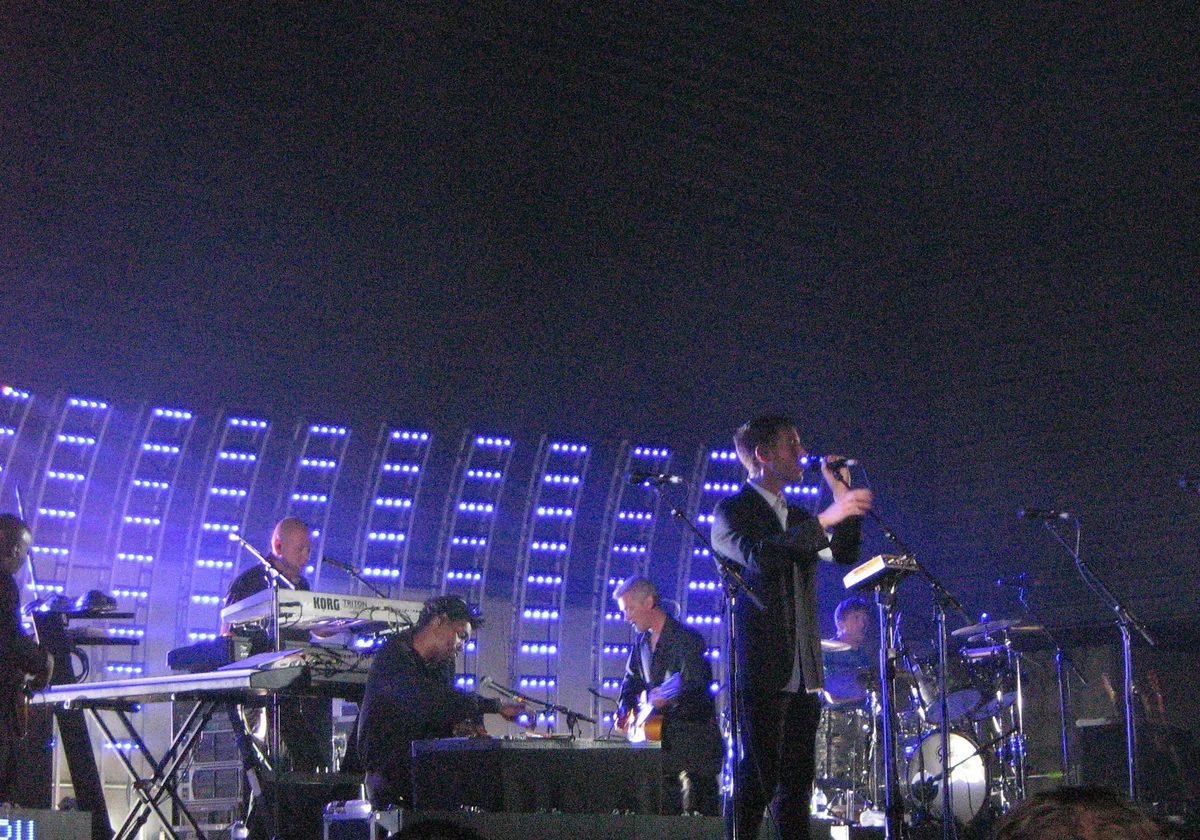
Massive Attack remain the clearest example of trip-hop as a complete artistic system. Blue Lines, Protection and Mezzanine changed instrumentation and emotional temperature while preserving bass weight, patient rhythm and collaborative voices. Their 2026 performance programme and announced new material keep that method active rather than purely historical. The producer lesson is arrangement through tension: a part can repeat for a long time when harmony, texture and vocal perspective keep changing around it. Bass is physical, silence is dramatic and every collaborator alters the emotional viewpoint. New artists should borrow that discipline, not reproduce Bristol-era surface noise.
Cover: Massive Attack. Photo by Ademarista, via Wikimedia Commons, CC BY-SA 3.0 (modified).

Top 10 trip-hop record labels
1. Ninja Tune — beats, bass and long-form artist development
Ninja Tune connects trip-hop history to a wide current catalogue of electronic, beat-driven and experimental music. Coldcut, The Herbaliser, Bonobo and newer artists demonstrate that rhythm and identity matter more than a fixed genre tag. A suitable demo needs a coherent world, detailed low end and enough material to suggest sustained artistic development.
2. Tru Thoughts — soul, beats and live musicianship
Tru Thoughts releases music across soul, electronic production, broken beat and instrumental hip-hop. It is a strong target for trip-hop projects built around singers or live players. Tighten the pocket, credit every musician and make the production support the performance. A dusty filter is less persuasive than a memorable song with deliberate sonic character.
3. G-Stone Recordings — dubwise downtempo lineage
G-Stone Recordings, founded by Kruder & Dorfmeister, remains synonymous with spacious downtempo, dub and beat music. Its catalogue rewards patience, bass control and understated detail. A fitting track should reveal depth across repeated listening. Keep effects returns clean, avoid over-compressing the groove and let instrumental timbre create movement instead of adding unnecessary transitions.
4. !K7 Records — electronic range and album perspective
!K7 Records spans electronic albums, DJ culture and the influential DJ-Kicks series. Trip-hop-oriented work fits when it connects to a wider artist statement and high production standard. Present finished mixes, clear collaborator information and a realistic release narrative. Show how the project works across several tracks rather than relying on one nostalgic single.
5. Cold Busted — instrumental beats with tactile character
Cold Busted focuses on instrumental beat music, downtempo and sample-informed grooves from an international roster. The label suits trip-hop without a conventional vocalist. Drum feel, bass movement and sample identity need to carry the track. Transform source material, preserve dynamic swing and sequence an EP or album so each beat contributes a different colour.
6. Bastard Jazz Recordings — groove-led hybrid music
Bastard Jazz Recordings connects electronic production with funk, soul, jazz and global rhythm. Trip-hop fits when live-feeling groove and songcraft lead the production. A suitable demo needs musicianship, not decorative jazz chords. Keep drums decisive, separate bass from warm keys and make guest performances central to the arrangement rather than added afterthoughts.
7. Heavenly Sweetness — soul, jazz and beat culture
Heavenly Sweetness supports projects across jazz, soul, hip-hop and electronic music. Its catalogue is relevant to cinematic trip-hop with strong musicians or carefully transformed samples. Present complete rights information and a clear album context. Texture should connect the beat to an emotional or cultural perspective, not simply signal vintage taste.
8. Lo Recordings — left-field electronic individuality
Lo Recordings has long released idiosyncratic electronic, ambient and experimental music. It suits trip-hop that bends structure, instrumentation or mood beyond familiar formulas. A fitting submission still needs an intelligible centre. Let one rhythm, voice or motif guide the listener, and use unusual processing to sharpen that idea rather than conceal weak writing.
9. Loci Records — cinematic downtempo and organic production
Loci Records, founded by Emancipator, centres downtempo electronic music with acoustic detail and cinematic pacing. Trip-hop producers with strings, live percussion or instrumental narratives can find a natural fit. Balance room texture with clear transients, shape a genuine arc and make sure the track works without relying on a dramatic visual.
10. Ghostly International — design-conscious electronic storytelling
Ghostly International spans electronic music, ambient, art-pop and instrumental beats within a strong visual framework. It is relevant for trip-hop projects with a distinct long-term identity. Present music, artwork and narrative coherently, but keep the recording central. A beautiful concept cannot replace memorable rhythm, melody or voice.
LISTN Trip-Hop radio coverage
LISTN maps Trip-Hop campaigns to its downtempo category. As of September 13, 2026, this category covers 23 distinct radios across 14 countries. The five leading countries are the United Kingdom (7), Germany (3), France (2), Argentina (1) and Belgium (1).
Complete radio count by country
United Kingdom: 7; Germany: 3; France: 2; Argentina: 1; Belgium: 1; Bulgaria: 1; Canada: 1; Chile: 1; Costa Rica: 1; Italy: 1; Kenya: 1; Mexico: 1; Portugal: 1; South Africa: 1.
Build a focused trip-hop campaign
Prepare a lossless master, radio edit where useful, instrumental and clean versions when relevant, BPM, full credits and sample clearances. Describe the record precisely: vocal trip-hop, dubwise downtempo, cinematic beats or instrumental hip-hop. Choose a preview that includes both rhythmic identity and the emotional centre.
Use listener, touring and prior-support data to prioritise countries, then inspect station schedules and recent tracklists. The coverage above sets the research order; programme fit determines the final targets. Keep artwork, metadata and versions consistent. When the project and target shows align, build a focused LISTN campaign.