
Hard techno promotion has to communicate physical impact before the listener hears a full drop. “Hard and fast” is not enough positioning: the release needs a recognizable tension, texture and use case, and every clip, pitch and visual should reinforce that identity.
This playbook turns those choices into a focused campaign from D-30 to D+30. It complements our broader music promotion by genre guide, but concentrates on the way hard techno actually travels: through DJs, rave footage, specialist communities, mixes, radio and repeatable high-energy visual moments.
Position the record before promoting it
Start with a one-sentence release brief naming the track’s character, set moment and listener. “A metallic, vocal-led peak-time weapon for dancers who like tension before impact” is more useful than “a hard techno banger” and guides the edits, artwork and contacts.
Place the record on a specific lane without pretending the borders are rigid:
- Rave-driven and euphoric: bright synth motifs, trance tension or a cathartic payoff. Lead with the contrast between lift and force.
- Industrial and punishing: distorted percussion, mechanical space and abrasion. Show the sound design and room pressure rather than relying on horror imagery alone.
- Schranz-leaning and rolling: persistent groove and percussive movement. Longer DJ-friendly passages and hands-on performance clips can sell this better than a single maximal drop.
- Vocal and attitude-led: a memorable phrase, callout or human presence is the entry point. Build several edits around the line without letting it become detached from the track.
Then identify the first listening context. Is the track meant for a DJ searching for a late-set tool, a raver discovering music through event clips, or a home listener following a hard-techno label? One campaign can reach all three, but one asset rarely serves all three equally well.
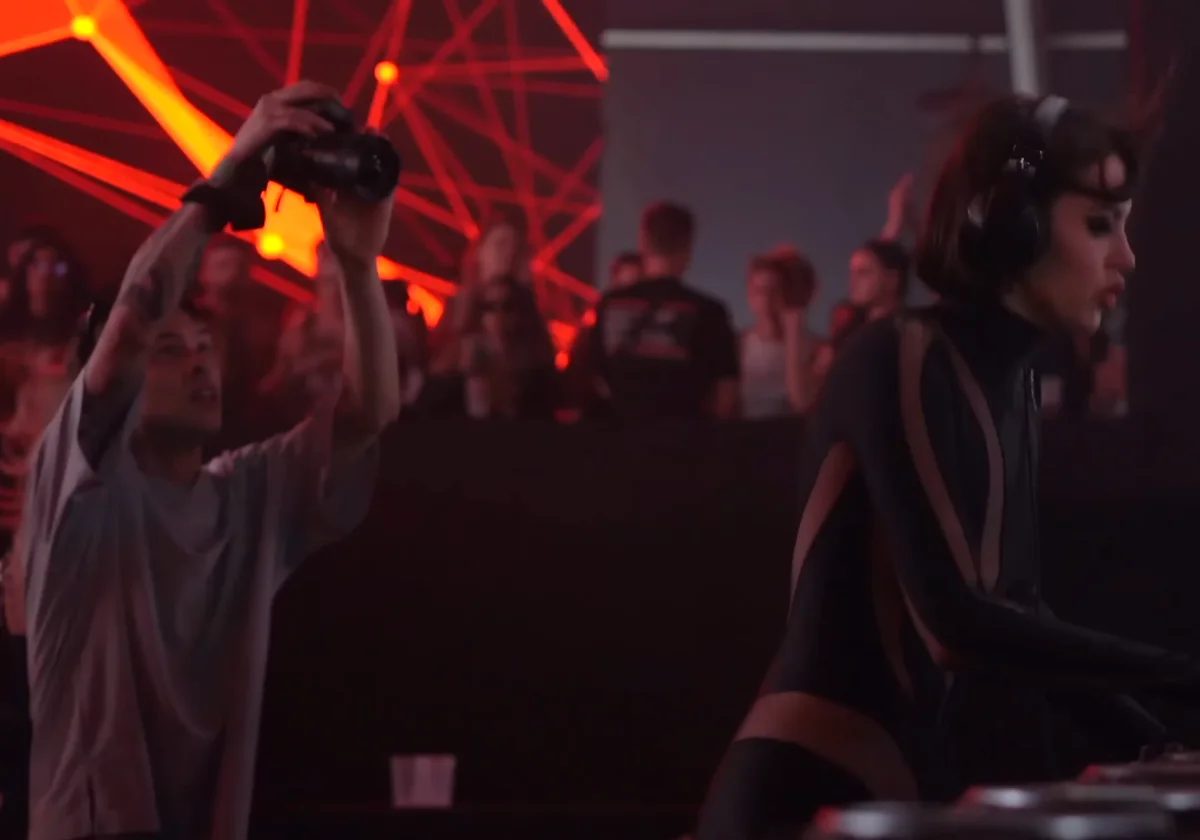
Prepare a clean extended version for DJs, a streaming version if the arrangement benefits from it, and three to five short vertical edits. Choose clips with different functions: the tension before the drop, the impact itself, a production or hardware detail, and a crowd-facing performance moment. Real rehearsal, booth or warehouse footage usually says more about function than generic flames, masks and strobe overlays.
Channel priorities for hard techno
1. DJ and scene outreach
Selectors are the most credible test of club function. Build a small list of DJs, residents, podcast hosts and radio programmers whose recent sets genuinely fit the record. Send a private stream or download, key release information and one sentence explaining where the track works in a set. Do not attach an enormous file without permission or call every track “peak time.”
Prioritize relevance over follower count. A local resident who regularly plays hard techno can create better evidence than a large creator with no relationship to the style. Ask for listening, not guaranteed support, and log replies so that follow-ups remain personal. If you have live footage of a DJ testing the track with permission, cut that moment into an asset after the event; never imply support that was not given.
2. Short-form performance content
Hard techno offers immediate visual rhythm, but repetitive drop clips become interchangeable. Build a sequence rather than posting the same 15 seconds repeatedly:
- tension and reveal;
- kick or synth construction in the studio;
- deck, live-hardware or rehearsal performance;
- an audience-context edit;
- a post-release remix, transition or fan-response prompt.
Frame the first second clearly enough to work without sound, then let the audio earn the next view. Use readable titles such as “the fake drop before the real impact” or “building the rumble from one hit,” not vague promises. YouTube explains the current Shorts format and creation workflow in its official Shorts help documentation; adapt the same vertical master carefully for each platform rather than uploading a watermarked export everywhere.
3. Streaming setup and editorial pitching
Deliver the release early enough to claim artist profiles, check credits and pitch before launch. Spotify allows one unreleased song to be pitched at a time, and says delivery at least seven days before release also places the selected song in followers’ Release Radar; see Spotify for Artists’ editorial pitching guidance. Use the pitch to describe the hard-techno lane, mood, instrumentation, release plan and relevant context. Avoid unsupported superlatives.
Treat playlists as one route, not the whole campaign. Save rate, repeat listening, profile visits and where listeners arrive from are more actionable than a screenshot of a single spike. Never buy “guaranteed” streams or playlist placement: Spotify warns that services promising streams or placement may use artificial methods and can lead to withheld royalties or removal, as described in its policy on third-party services.
4. SoundCloud, Bandcamp and the core audience
SoundCloud remains useful for private links, premieres, repost relationships, DJ discovery and alternate club versions. Complete the genre and metadata rather than stuffing unrelated tags; SoundCloud’s official tagging guidance recommends choosing the main genre and relevant tags so discovery systems can categorize a track.
Bandcamp is valuable when the release has a paid download, extended mix, WAV option, full EP or physical edition. Give supporters something coherent: strong artwork, useful notes, credits and a direct message timed to release day. Bandcamp’s own artist guide explains how followers, recommendations, messaging and direct sales connect. Do not create a token page you will abandon after launch.
5. Mixes and long-form video
A hard-techno track becomes more legible inside a set. Record a concise mix that places the release among compatible records, or create a performance video showing how you transition into and out of it. Publish a complete track visualizer on YouTube so searches lead somewhere durable. Credit every track in a mix and secure the rights needed for uploads; a promotional goal does not override copyright rules. YouTube’s copyright overview is the appropriate starting point.
6. Labels, specialist media and radio
Pitch outlets that already cover the precise sound. A useful message contains a private link, release date, short positioning line, clean artwork, credits and a reason that outlet fits. For label research, use our guide to hard techno record labels as a map, then listen to each label’s newest releases and follow its published submission process. Do not send a generic BCC blast or assume every hard-dance platform wants hard techno.
D-30 to D+30 hard techno release timeline
D-30 to D-22: define and prepare
Finalize masters, artwork, metadata, credits and delivery. Write the release brief, select the DJ version and export private streaming links. Build three contact groups: DJs and residents, specialist media or radio, and owned supporters. Film one studio session and one performance-oriented session, even if the latter is a controlled rehearsal rather than a staged “crowd” scene.
D-21 to D-15: seed the club network
Send the record to the most relevant DJs first. Space the outreach so you can answer properly. Submit the streaming pitch, update profile images and schedule the durable release destinations. Test two short clips with different hooks—perhaps the vocal cue against the kick-design moment—and compare completion, saves, comments with real genre recognition and profile actions, not views alone.
D-14 to D-8: establish the world
Reveal the artwork and positioning. Publish a clip that explains the track’s intended set moment, then a contrasting studio or rehearsal asset. Contact specialist media, radio and mix curators with enough lead time to listen. Prepare captions, links and vertical crops, but leave room to respond if one angle proves clearly stronger.
D-7 to D-1: convert attention
Follow up once with contacts who have not replied and only when you have something useful to add. Share a permitted support quote or play clip, schedule email and Bandcamp communication, and test every landing-page destination. Post a DJ transition or breakdown that demonstrates function without giving away every peak. Brief collaborators on exact credits and posting times rather than asking everyone to paste identical copy.
D0 to D+3: make the release easy to hear
Publish the main video, streaming and purchase links, then personally notify the warmest supporters. Use one clear call to action per post: listen, buy, watch or add to a set. Thank genuine supporters without exaggerating their role. Check credits, links and audio availability across services. Capture meaningful replies and DJ feedback for later assets only with permission.
D+4 to D+14: prove function
Release the strongest second-wave asset: a live test, transition tutorial, full performance, production breakdown or extended-mix moment. Review which countries, cities, sources and clips produced sustained listening or sales. Send a short update to selected DJs, radio hosts or writers when there is new evidence, not merely because a week has passed.
D+15 to D+30: extend the record’s life
Publish the mix, alternate version or deeper making-of content promised earlier. Retarget only people who showed relevant intent if you are running ads. Archive contact notes, assets and learnings, and identify which relationships deserve continued support before your next release. End with a campaign review covering reach, qualified engagement, listens or sales, costs and concrete follow-up opportunities.
Realistic budgets
€0: focus and direct relationships
Use your phone, editing software you already have and two planned filming sessions. Prioritize a private DJ pool, personal outreach, organic vertical clips, a SoundCloud upload, a complete Bandcamp or streaming page and one mix. Spend time researching 20 strong contacts rather than scraping hundreds. The trade-off is labor: writing individual pitches, editing several openings and tracking responses carefully.
€100: solve one visible weakness
A sensible split might be €40 for a focused visual shoot or location contribution, €30 for vertical editing or artwork adaptations and €30 for a small test behind the best organic clip. Alternatively, spend the full amount on professional mastering if the low-end translation is the true constraint. Do not divide €100 across five weak ads; use it to improve one bottleneck.
€500: build a compact campaign
One workable allocation is €150 for a one-location performance shoot, €100 for artwork and multi-format edits, €150 for controlled paid tests and €100 reserved to scale the asset that produces qualified actions. Reallocate toward mastering, a publicist or a legitimate premiere partner only when that is the campaign’s actual need. Set caps, tag links and stop poor tests quickly. Paid reach should amplify proven creative, not manufacture credibility.
Hard techno promotion mistakes to avoid
- Selling only BPM and aggression. Speed is not a story. Articulate the groove, tension, texture or emotional release that distinguishes the record.
- Using borrowed rave footage. Unlicensed crowd clips weaken trust and may violate rights. Create your own performance context or obtain explicit permission.
- Pitching hard techno as one undifferentiated scene. A euphoric festival track, a raw industrial tool and a rolling schranz cut do not share identical contacts.
- Showing only the drop. DJs need to understand transitions and arrangement; listeners need tension and personality. Show both.
- Buying false proof. Artificial streams and guaranteed placements damage data quality and can trigger platform action.
- Overdesigning the darkness. Skulls, red strobes and warehouse type cannot compensate for an identity that sounds interchangeable.
- Ignoring local scenes. Residents, independent nights, specialist radio and small stores often provide the first meaningful context. Support them before asking for favors.
- Posting intensely for three days, then disappearing. Hard techno records can travel through sets for weeks. Plan a second and third wave.
Final release checklist
- One-sentence positioning names the sound, set moment and listener.
- Masters, extended version, credits, artwork and metadata are final.
- Private DJ link and public landing page work on mobile.
- Three to five vertical edits have distinct hooks.
- DJ, media/radio and supporter lists are separate and researched.
- Spotify pitch is submitted early with accurate context.
- SoundCloud tags and Bandcamp or store details are complete where relevant.
- Full-track or mix content has credits and necessary permissions.
- Release-day posts each use one clear call to action.
- Follow-ups are personal, limited and based on new value.
- Budget has caps and a reserve for the best-performing asset.
- D+14 and D+30 reviews are scheduled.
Hard techno campaigns work when the record, visuals and outreach describe the same physical experience. Lead with the exact set moment, earn credible scene support, and keep releasing evidence after launch instead of chasing one noisy day. When your assets and target list are ready, you can pitch your hard techno release with LISTN and build a focused outreach campaign.